 Pin it
 My kitchen smelled like mustard and butter the afternoon I first tried Brussels sprouts this way, after a neighbor casually mentioned she'd discovered something that changed how her family ate vegetables. I was skeptical—I'd spent years roasting them until they were almost bitter—but the moment that cream cheese sauce hit the pan, I understood why she'd been grinning. The sprouts went from a vegetable you tolerate to something you actually reach for, which says everything.
There was a dinner party where I made this as a last-minute addition, nervous I'd oversalted the sauce or made it too tangy. Instead, someone asked for the recipe mid-meal, and I watched three different people go back for seconds while the main course sat half-finished on their plates. That's when I stopped thinking of it as a side and started making it intentionally, knowing it would be the dish people actually remembered.
Ingredients
- Brussels sprouts (600 g), cleaned and trimmed: The fresher they are, the brighter the flavor, and halving the larger ones helps everything cook evenly.
- Cream cheese (150 g): Room temperature makes it blend into the sauce smoothly without lumps, which I learned after one particular frustration.
- Dijon mustard (2 tablespoons): This is what gives the whole dish its personality—don't skip it or substitute with regular mustard, which will change everything.
- Vegetable broth (150 ml): The quality matters because it's a starring ingredient, not hidden in the background.
- Butter (2 tablespoons): For sautéing the aromatics and building the sauce base.
- Onion (1 small), finely chopped: The texture matters here—fine pieces dissolve into sweetness rather than staying chewy.
- Garlic clove (1), minced: Just one is enough; too much overpowers the delicate mustard flavor.
- Lemon juice (1 teaspoon): A small amount lifts everything and prevents the sauce from feeling heavy.
- Salt and pepper to taste: Add these gradually because the broth and mustard already carry saltiness.
- Fresh parsley, chopped: The garnish adds a color pop and a hint of brightness that completes the plate.
Tired of Takeout? 🥡
Get 10 meals you can make faster than delivery arrives. Seriously.
One email. No spam. Unsubscribe anytime.
Instructions
- Boil the Brussels sprouts until just tender:
- Fill a large pot with salted water and bring it to a rolling boil—the salt seasons the sprouts from the inside out. Add the trimmed Brussels sprouts and cook for 5 to 7 minutes until a fork pierces them easily but they still feel slightly firm in the center, then drain them well.
- Build the sauce base with aromatics:
- In a large skillet, melt the butter over medium heat until it foams slightly, then add the finely chopped onion. Let it cook for 3 to 4 minutes, stirring occasionally, until it's soft and translucent with just a whisper of golden color at the edges.
- Add the garlic and let it bloom:
- Stir in the minced garlic and let it cook for about 1 minute—you'll know it's ready when the kitchen suddenly smells incredibly aromatic. Don't let it brown or it will taste bitter.
- Create the creamy mustard sauce:
- Lower the heat to medium-low, then tear the room-temperature cream cheese into chunks and add it to the pan along with the Dijon mustard. Stir constantly with a wooden spoon, letting the cream cheese soften and blend in—this takes 2 to 3 minutes of patience.
- Incorporate the broth until silky:
- Pour the vegetable broth in slowly while stirring continuously, watching the sauce come together into something thick and luxurious. Keep stirring until there are no lumps and it flows like silk.
- Season and balance the flavors:
- Add the lemon juice along with a pinch of salt and pepper, then taste and adjust—the lemon should be just present enough to brighten things without being obvious.
- Coat the sprouts and warm through:
- Gently add the drained Brussels sprouts to the skillet and toss them carefully with the sauce for 2 to 3 minutes until everything is coated and heated through. Rough handling can break them apart, so a gentle touch matters here.
- Plate and finish:
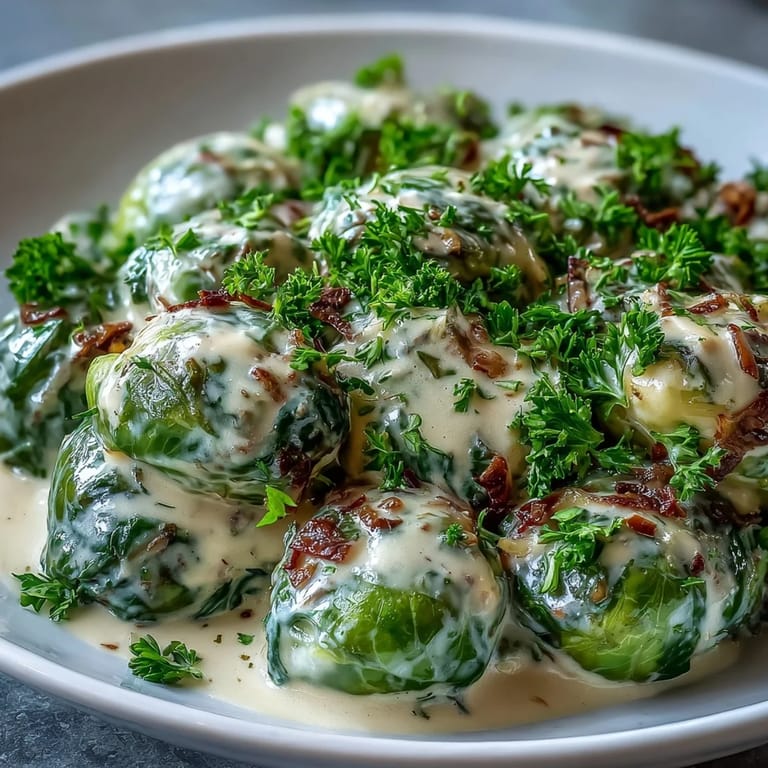
- Transfer everything to a serving dish and scatter fresh chopped parsley across the top for color and a final hint of freshness.
 Pin it
 I remember standing in my kitchen on a quiet Tuesday evening, looking at a plate of these Brussels sprouts and realizing how a simple combination of ingredients had somehow made something feel special. It wasn't fancy or complicated, but it felt like cooking with intention—the kind of meal that reminds you why being in the kitchen matters.
Why This Sauce Works So Well
The magic here isn't one ingredient doing all the heavy lifting—it's how they talk to each other. Cream cheese brings body and richness, mustard brings sharpness and personality, and lemon juice keeps everything from feeling too heavy. The broth ties it all together into something creamy without needing actual cream, which feels like a small kitchen victory every time I make it. When these proportions are right, the sauce tastes like it took hours to develop, even though it comes together in minutes.
Ways to Make It Your Own
This recipe is honestly great as written, but I've played with it enough to know where you can bend the rules. A small pinch of cayenne pepper adds a subtle warmth without heat; fresh thyme instead of parsley shifts the whole mood toward something more autumn-forward; and I've even added a tablespoon of grainy mustard alongside the Dijon for extra texture. The sauce also works as an unexpected dip for bread or as a spread on sandwiches the next day, which I discovered completely by accident when I had leftovers.
Storage and Make-Ahead Notes
This dish actually improves when made ahead—the flavors settle and become rounder overnight. You can keep it covered in the refrigerator for up to 3 days and reheat it gently over low heat with a splash of broth to loosen the sauce back to the right consistency. Cold leftovers are less appealing, but reheated? They become something you look forward to eating.
- Store in an airtight container and reheat slowly so the sauce stays silky rather than breaking.
- The dish freezes reasonably well for up to a month, though the texture of the Brussels sprouts becomes slightly softer after thawing.
- Add the fresh parsley garnish fresh after reheating rather than before storing, so it stays bright and green.
 Pin it
 This has become one of those recipes I make without checking notes anymore, which means it's passed some invisible threshold from interesting dish to trusted favorite. I hope it finds that same place in your kitchen.
Recipe FAQs
- → Can I make this dish ahead of time?
Absolutely. Prepare the sauce and Brussels sprouts separately, then combine when ready to serve. Reheat gently over low heat, adding a splash of broth if the sauce thickens too much. Actually tastes better the next day as flavors meld.
- → What can I serve with Brussels sprouts in cream cheese sauce?
Works beautifully alongside roasted chicken, pork loin, or German sausages. Also pairs well with mashed potatoes, crusty bread, or over pasta for a vegetarian main. The creamy sauce complements most proteins and starches.
- → Can I use frozen Brussels sprouts instead of fresh?
Frozen sprouts work in a pinch, though fresh yields better texture. Thaw completely and pat dry before boiling. Skip the initial boiling step and add directly to the sauce, simmering until tender—about 8-10 minutes.
- → How do I adjust the mustard flavor?
Start with 1 tablespoon for mild tang, increase to 2 for bold mustard lovers. Whole grain mustard adds texture, while spicy brown mustard delivers more heat. Taste and adjust after the sauce simmers.
- → Is this sauce suitable for other vegetables?
This versatile cream cheese-mustard sauce works wonderfully with cauliflower, broccoli, green beans, or carrots. Cooking times may vary slightly depending on the vegetable density.
- → Can I make this dish dairy-free?
Substitute vegan cream cheese and dairy-free butter or olive oil. The sauce may be slightly less rich but equally delicious. Coconut cream can replace cream cheese for a different flavor profile.