 Pin it
 There's something about the smell of garlic hitting melted butter that makes you pause mid-conversation. I learned that while prepping dinner for friends one April evening when the kitchen windows were finally open again. The salmon hit the pan with this gentle sizzle, and suddenly everyone abandoned the living room to crowd around the kitchen island, drawn by something they couldn't quite name. That's when I realized this dish wasn't just about feeding people—it was about creating that moment where food becomes the reason everyone stops what they're doing and pays attention.
My sister called it my "show-off dinner," and she wasn't wrong. The first time I made this for her and her boyfriend, I was nervous—their kitchen at home is basically a professional setup. But when those golden salmon fillets came out with the asparagus barely caramelized at the edges, something shifted. They both went quiet, which for them is basically a standing ovation. It became the dish I'd make whenever I wanted to prove I could handle myself in the kitchen without looking like I was trying too hard.
Ingredients
- Salmon fillets (4, about 6 oz each): The skin-on versions hold together better and get beautifully crispy, but skinless works just fine if that's what your fishmonger has that day.
- Fresh asparagus (1 lb): Snap off those woody ends by bending until they naturally break—it's faster than cutting and you won't waste tender spears.
- Lemon (1): Fresh lemon is non-negotiable here because the brightness cuts through the richness of the butter in a way bottled juice just can't replicate.
- Unsalted butter (4 tbsp): Melted butter becomes the foundation of everything, so use the good kind and let it cool slightly before whisking so you don't scramble the garlic.
- Garlic (3 cloves), minced: The mincing matters because large chunks can burn while the delicate asparagus finishes cooking, and bitter garlic ruins the whole vibe.
- Fresh parsley (2 tbsp): This is the final flourish, added after everything else so it stays bright green and doesn't fade into the background.
- Dijon mustard (1 tsp): A small amount adds depth and helps emulsify the sauce, making it cling to the salmon instead of pooling.
- Salt, black pepper, and red pepper flakes: Start conservatively with these—you can always taste and adjust, but you can't take it back.
Tired of Takeout? 🥡
Get 10 meals you can make faster than delivery arrives. Seriously.
One email. No spam. Unsubscribe anytime.
Instructions
- Set your stage:
- Preheat the oven to 400°F and line a baking sheet with parchment paper so nothing sticks and cleanup becomes just tossing the paper. This takes two minutes and completely changes the outcome.
- Arrange with intention:
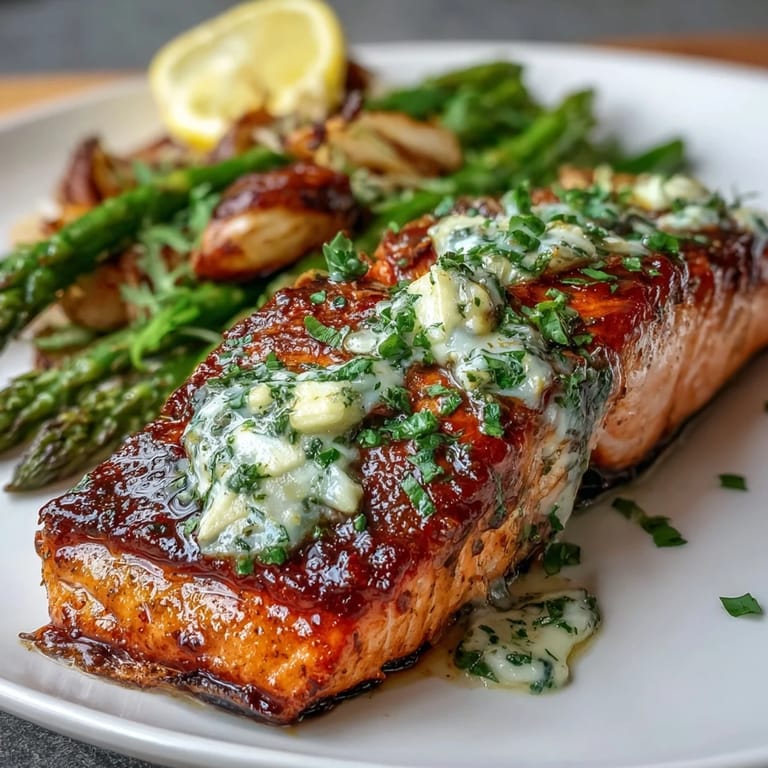
- Place the salmon in the center where it gets the most even heat, then arrange asparagus in a single layer around it—those lemon slices tucked between act as little flavor bridges. This spacing matters because you want the asparagus to roast, not steam.
- Build your butter sauce:
- Whisk the melted butter with minced garlic, lemon juice, mustard, salt, pepper, and red pepper flakes in a small bowl until it's emulsified and fragrant. Don't overthink this—you're just combining, not aerating.
- Coat everything evenly:
- Drizzle the garlic butter sauce over both salmon and asparagus in one slow, deliberate motion so nothing gets neglected. Uneven distribution is why some bites feel incomplete.
- Watch and trust your instincts:
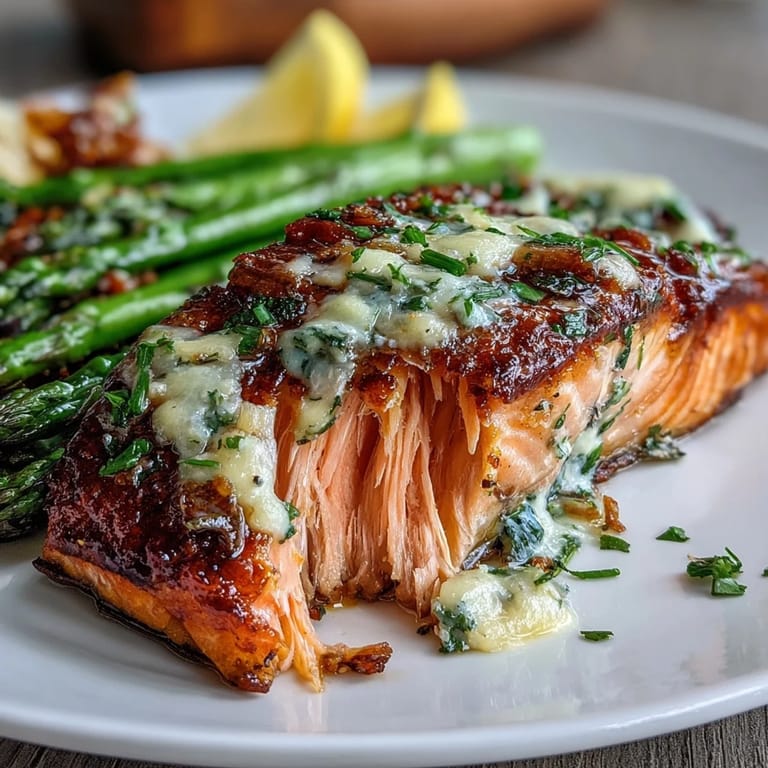
- Roast for 15 to 18 minutes until the salmon flakes when you press it gently and the asparagus tips have just started to brown at the edges. The exact time depends on how thick your fillets are, so don't just set a timer and walk away.
- Finish and serve:
- Sprinkle parsley right before serving so it keeps its color and fresh taste. A squeeze of extra lemon right at the table always feels like the final touch that makes people say yes.
 Pin it
 One evening, a friend who doesn't eat fish asked for this recipe because his new partner is pescatarian and he wanted to cook for her. Watching him realize that food made with care transcends dietary categories was one of those quiet kitchen moments that stays with you. He's made it three times now, and I hear it's become their Sunday dinner tradition.
The Secret to Crispy Asparagus
Most people roast asparagus and end up with limp stalks that taste like regret. The trick is spacing them in a single layer so they touch the hot pan, not each other, and not worrying about turning them halfway through unless your oven has uneven heat. The garlic butter helps because the fat conducts heat and creates that light caramelization on the tips while the centers stay tender. Think of asparagus like thin green beans—they're faster than you think, so if you're roasting for exactly eighteen minutes for the salmon, your asparagus is already where it wants to be.
Choosing Your Salmon Wisely
The quality of your salmon determines everything, more than any technique or sauce could. Look for fillets that smell like the ocean, not fishy, with flesh that springs back when you press it gently. If your fishmonger is cutting them fresh while you wait, that's the moment to ask them to leave a bit of skin if you like that texture, or remove it completely if you're skeptical. The color should be vibrant—pale salmon means it's been sitting around, and that matters more than whether it's wild or farmed.
Building Flavors That Balance
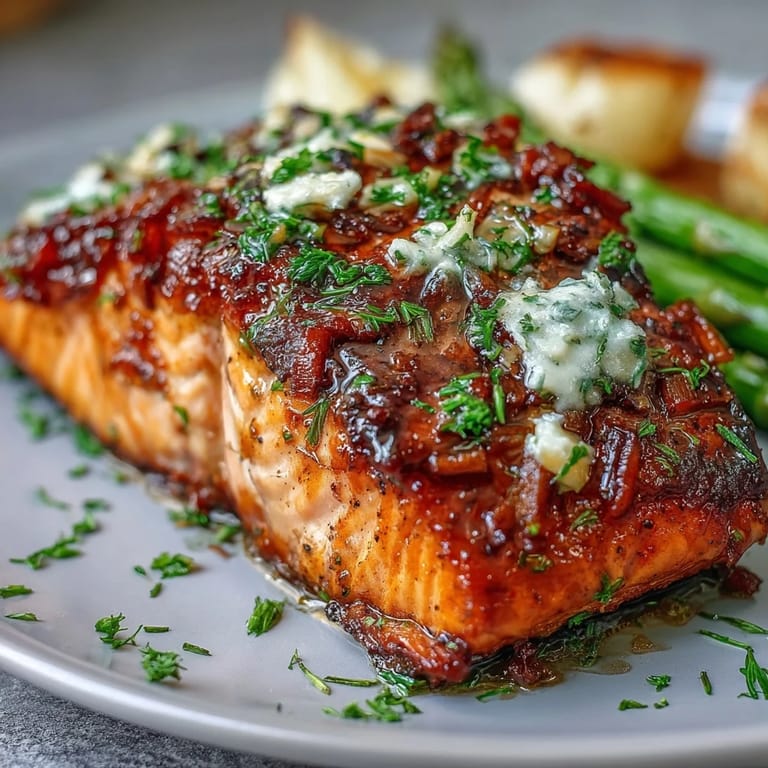
This dish works because nothing overshadows anything else—the garlic enhances the butter, the lemon cuts through the richness, and the mustard pulls it all together into something that tastes more complex than the ingredient list suggests. The asparagus isn't just a side; it's picking up all those flavors and adding its own earthiness. If you're worried about the red pepper flakes, remember that a quarter teaspoon is barely noticeable, more of a whisper than a shout, and the warmth it brings rounds out the whole experience.
- Taste the sauce before drizzling to make sure the salt and acid are balanced to your preference.
- If you accidentally over-salt, a squeeze of extra lemon juice can usually save it.
- The beauty of this dish is that it's forgiving enough to adjust in real time, so taste as you go.
 Pin it
 This is the meal you make when you want to feel competent in the kitchen without the stress, and somehow it always seems to impress people more than it should. Serve it, watch everyone lean in, and let the simplicity of good ingredients doing what they're meant to do speak for itself.
Recipe FAQs
- → What type of salmon is best for this dish?
Fresh, skin-on or skinless salmon fillets around 6 oz each provide optimal texture and flavor when roasted.
- → Can I substitute asparagus with other vegetables?
Yes, green beans or broccolini work well as alternatives, maintaining crispness and complementing the garlic butter.
- → How can I ensure the salmon stays moist while cooking?
Drizzling the garlic butter sauce evenly over the salmon and asparagus helps seal in moisture and enhance flavor during roasting.
- → Is it necessary to use fresh lemon for this preparation?
Fresh lemon slices and juice add brightness and balance, elevating the richness of the garlic butter sauce.
- → What is the ideal oven temperature and cooking time?
Roasting at 400°F (200°C) for 15–18 minutes allows the salmon to flake easily while keeping asparagus tender.