 Pin it
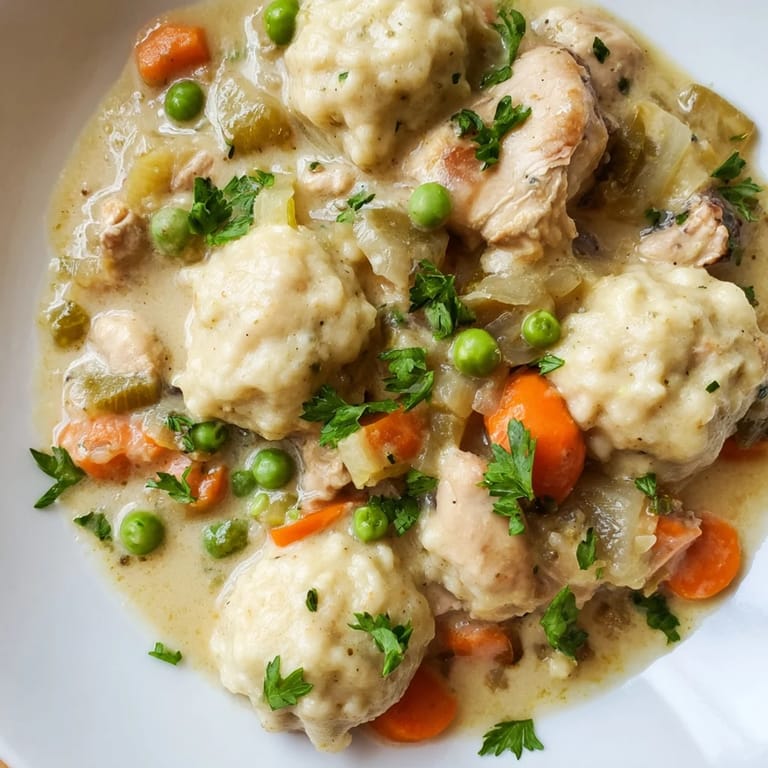
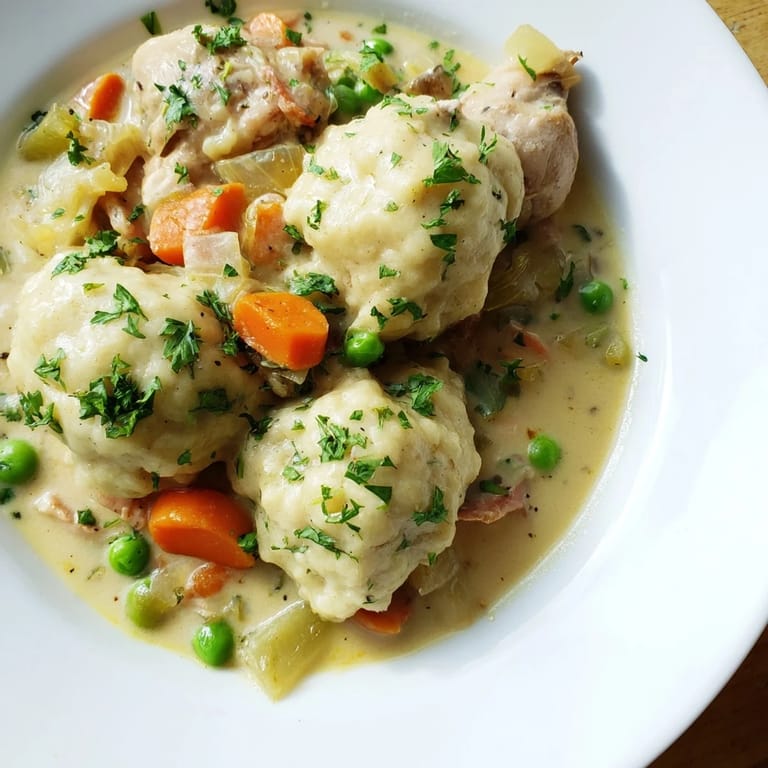
 There's something about the sound of a wooden spoon scraping the bottom of a pot that makes me feel like I'm doing something right. Years ago, I watched my neighbor stir her chicken and dumplings on a Sunday afternoon, steam rising up and fogging her kitchen window, and I realized the magic wasn't in fancy ingredients—it was in that patient stirring, that gentle building of flavor. She taught me that this dish is really about creating comfort in layers: a golden, creamy broth that hugs tender chicken, then topped with pillowy dumplings that soak up every last bit of goodness.
I made this for my college roommate's first apartment dinner, back when we were both broke and trying to impress. She walked in, smelled that buttery, herb-filled steam, and forgot about everything else—the rickety furniture, the bare walls, all of it. We sat at her tiny kitchen table with oversized bowls and talked until the dumplings went cold, and I understood then why this dish has survived generations.
Ingredients
- Boneless, skinless chicken thighs or breasts (2 lbs): Thighs stay more forgiving and flavorful than breasts, but either works—just don't skip them under the knife; rough chunks cook better than tiny pieces.
- Unsalted butter and olive oil (2 tbsp plus 2 tbsp): The combination gives you both richness and a slightly higher smoke point for that proper sauté.
- Onion, carrots, and celery (1 large, 3 medium, 2 stalks): This holy trinity isn't negotiable—it's the foundation that makes everything taste like home.
- Garlic (3 cloves, minced): Don't be shy; minced garlic blooms into something sweet and mellow when you give it just one minute in hot fat.
- All-purpose flour (1/4 cup): This is your thickener and flavor builder—the flour cooked into fat creates a roux that catches the broth and makes it velvety.
- Low-sodium chicken broth (6 cups): Low-sodium lets you control the salt and prevents the broth from tasting tinny by the end of cooking.
- Whole milk or heavy cream (1 cup): Add it late so it doesn't break; this is what turns a simple broth into something luxurious.
- Dried thyme, bay leaf, salt, and pepper: Thyme whispers herbaceous warmth, the bay leaf deepens everything, and you'll adjust salt at the very end—trust your taste.
- Frozen peas (1 cup) and fresh parsley (2 tbsp): Peas add a sweetness and pop of color; parsley is your last-minute brightness that makes people ask what's different.
- All-purpose flour, baking powder, salt, unsalted butter, and whole milk (2 cups flour, 1 tbsp baking powder, 1 tsp salt, 2 tbsp melted butter, 3/4 cup milk): For the dumplings—keep your hand light and your mixing brief, or they'll be dense instead of fluffy.
Tired of Takeout? 🥡
Get 10 meals you can make faster than delivery arrives. Seriously.
One email. No spam. Unsubscribe anytime.
Instructions
- Build your base with butter and oil:
- Heat both over medium in your largest pot until the butter foams. The fat is your vehicle—it's where flavors live. Add onions, carrots, and celery, and let them soften for five minutes, stirring now and then until the kitchen smells undeniably good.
- Wake up the garlic:
- Stir in minced garlic and let it go for exactly one minute—any longer and it bitters, any shorter and it doesn't bloom. You'll smell when it's ready: fragrant and almost sweet.
- Make your roux:
- Sprinkle flour over everything and stir until every vegetable is coated in pale paste. Cook for two minutes, stirring often, until it loses its raw smell and starts to turn golden at the edges.
- Bring in the broth:
- Pour in chicken broth slowly, stirring constantly so lumps don't have a chance to form. This is the moment the pot transforms from a vegetable sauté into something deeper.
- Simmer the chicken until tender:
- Add your chicken chunks, thyme, bay leaf, salt, and pepper. Bring to a boil, then drop the heat low, cover, and let it bubble gently for twenty minutes until the chicken is cooked through and starting to shred at the edges. The chicken doesn't need to be perfect—it'll soften as it sits.
- Finish the broth:
- Remove the bay leaf (really do this—it's unpleasant to bite into). Stir in milk or cream, frozen peas, and chopped parsley. Let it simmer gently while you make the dumplings; the peas will thaw and the flavors will marry.
- Make dumpling dough:
- Whisk together flour, baking powder, and salt in a separate bowl. Stir in melted butter and milk just until combined—the dough should be shaggy and slightly lumpy, not smooth. Overmixing makes tough dumplings.
- Drop dumplings onto the stew:
- Using a spoon or small ice cream scoop, drop spoonfuls of dough onto the simmering surface, spacing them so they have room to puff. You'll fit about twelve to fifteen dumplings depending on size.
- Steam them under a lid:
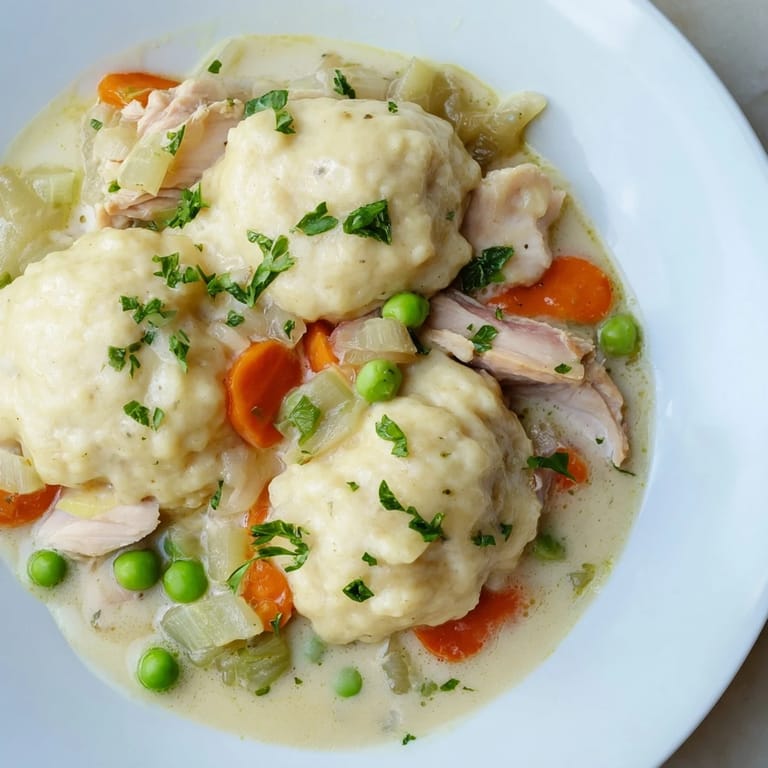
- Cover the pot tightly and lower the heat to keep it at a gentle simmer—not a rolling boil. Do not lift the lid for fifteen minutes; steam is doing the work, and peeking lets it escape. After fifteen minutes, they'll be puffed and cooked through, with no doughy centers.
- Taste and serve:
- Taste the broth and add more salt or pepper if it needs it. Ladle stew and dumplings into bowls, garnish with fresh parsley, and serve while it's hot enough to steam.
 Pin it
 My grandmother used to say that chicken and dumplings was the dish that brought people back to the table after hard days. There's truth in that—something about ladling it into bowls and watching someone's expression shift from tired to grateful reminds you why feeding people matters.
The Roux: Your Secret Weapon
The moment you cook flour into butter, you're making a roux, and it's the reason this broth isn't watery or thin. That two-minute window matters—it's just long enough for the flour to lose its raw taste and start browning at the edges, which adds a toasted, nutty depth to everything that follows. Some people skip this step and end up with a broth that feels thin no matter how much cream they add. Don't be them.
Choosing Your Chicken
Thighs are more forgiving than breasts because they stay moist even if you overcook them slightly. If you only have chicken breasts, they'll work fine—just watch them closely during that twenty-minute simmer and don't let them turn into rubber. The chunks should be generous and irregular; uniform cubes cook unevenly and feel manufactured.
Make It Your Own
This is a recipe that welcomes small additions without falling apart. Some people swear by a splash of dry white wine stirred in with the broth, or a pinch of nutmeg in the dumpling dough. I've seen cooks add tarragon, swap in half turkey meat, use low-fat milk for lighter days, and every version was good.
- A splash of white wine deepens the broth's flavor and adds brightness that cream alone can't.
- Fresh or dried sage works beautifully alongside thyme if you want to shift the taste.
- Keep the dumplings simple—they're meant to soak up the broth, not compete with it.
 Pin it
 This dish is the edible version of a hug, the kind of food that reminds you why you learned to cook in the first place. Make it when you need to slow down.
Recipe FAQs
- → What type of chicken works best?
Boneless, skinless chicken thighs or breasts both yield tender results; thighs offer more flavor and moisture.
- → How should dumplings be cooked?
Dumplings are carefully dropped onto the simmering stew surface and covered, steaming gently until puffed and cooked through.
- → Can I use stock alternatives?
Low-sodium chicken broth is recommended for depth, but vegetable stock can be used for a lighter flavor.
- → What herbs enhance the flavor?
Dried thyme and fresh parsley add aromatic notes that complement the creamy broth beautifully.
- → How do I achieve fluffy dumplings?
Use baking powder in the flour mix and avoid overmixing; this ensures light, tender dumplings.