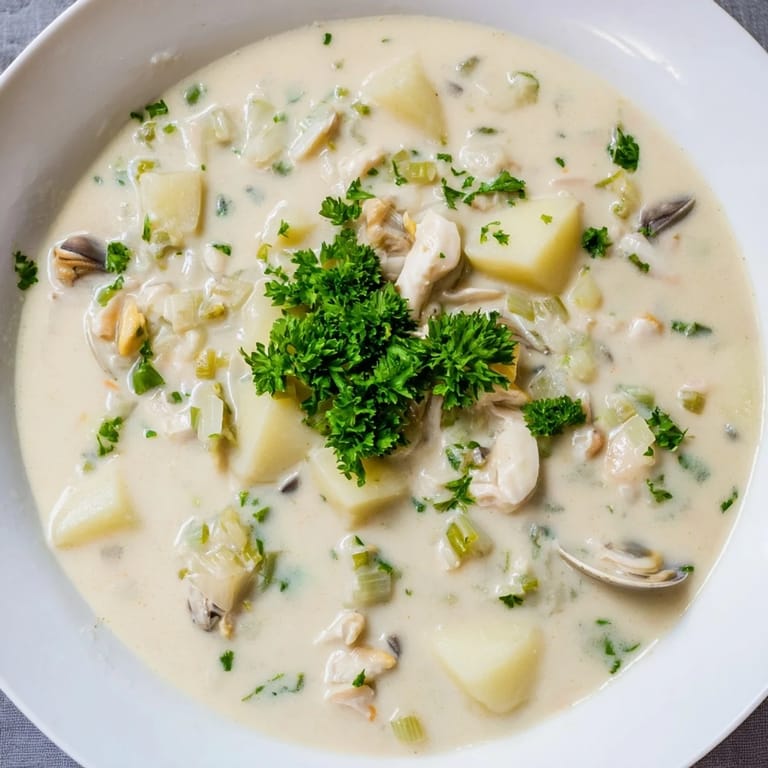
 Pin it
 There's something about the smell of clams steaming in their own broth that transforms a kitchen—it happened to me on a gray November afternoon when a friend insisted on making chowder from scratch. I'd always bought it from a seafood shack down the road, convinced homemade was too finicky, but watching the clams crack open one by one changed my mind entirely. Now, whenever the weather turns cold, this is the soup I reach for, creamy and honest and exactly what comfort tastes like.
I made this for my sister one Sunday, and she ate two bowls without saying much, which is how I knew it was good. She called the next day asking for the recipe, and I realized then that the best meals aren't the ones that impress—they're the ones people want to recreate in their own kitchens, their own way.
Ingredients
- Fresh clams: Two pounds scrubbed and alive will give you the sweetest juice; if you can't find them or prefer canned, reserve every drop of that liquid because it's pure umami.
- Potatoes: Cut them small so they soften in time and don't overpower the delicate clam flavor.
- Onion, celery, and carrot: The holy trinity of flavor building; don't skip the carrot even though it's optional, it adds a quiet sweetness.
- Heavy cream and whole milk: Use real cream if you can; it makes a difference in the final richness.
- Unsalted butter: Start your vegetables here so they absorb real flavor before everything else joins the pot.
- Clam juice: Bottled works, but homemade from steaming is where the magic lives.
- Flour: Creates the roux that thickens everything just enough without making it gluey.
- Bay leaf and thyme: Add these early so they infuse the whole pot with that coastal, herby depth.
- Fresh parsley: Brighten each bowl at the end—it's the punctuation mark that brings everything together.
Tired of Takeout? 🥡
Get 10 meals you can make faster than delivery arrives. Seriously.
One email. No spam. Unsubscribe anytime.
Instructions
- Steam the clams if starting fresh:
- Fill a large pot with water, bring it to a vigorous steam, and listen for the satisfying pop as shells open. This takes about five to seven minutes; discard any stubborn ones that refuse to open.
- Build your flavor base:
- Melt butter and let it get foamy before onions hit the pan. Sauté slowly so they turn translucent and sweet, then add the supporting vegetables—this is where patience pays off.
- Make the roux:
- Dust flour over the softened vegetables and stir constantly for two minutes. You're not looking for color here, just a subtle paste that will bind everything later.
- Bring in the liquids:
- Whisk in clam juice slowly so no lumps form. The mixture should smell briny and rich by now, a hint of what's coming.
- Simmer the potatoes:
- Let them cook until they're completely tender but not falling apart, about fifteen to twenty minutes. This is the moment to taste and adjust salt—go easy because clam juice is already salty.
- Finish with cream and clams:
- Stir in your chopped clams and heavy cream gently, letting everything warm through without boiling. Five more minutes and the transformation is complete.
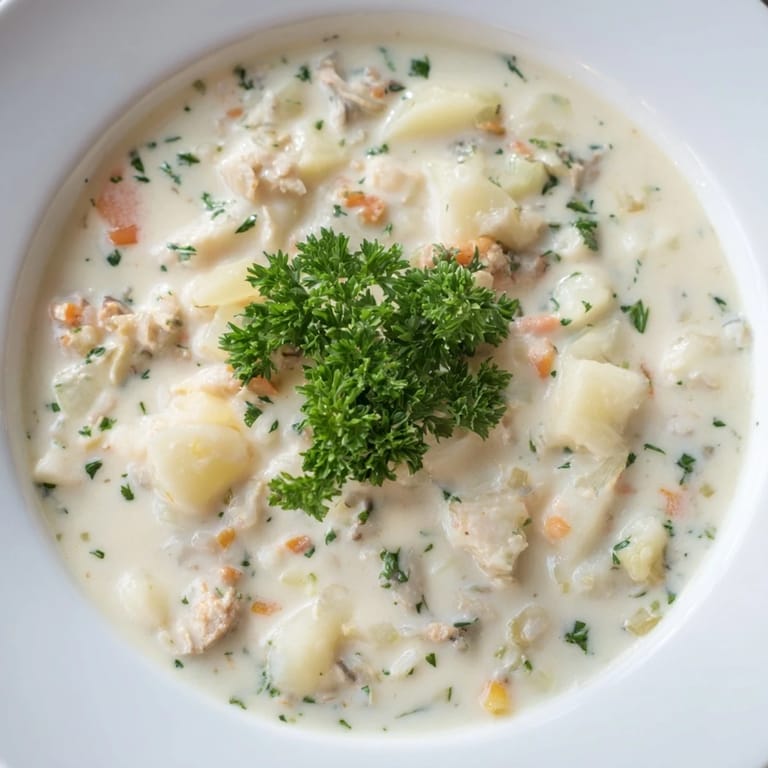 Pin it
 The first time I served this to a table of people I wanted to impress, I stopped worrying halfway through the meal because everyone was too busy eating. Food that makes people quiet is food that's done its job.
Fresh vs. Canned: What I've Learned
Fresh clams are worth the effort if you can find them—the steaming process fills your kitchen with briny ocean air and you end up with tender meat and pure homemade stock. If you go the canned route, which is perfectly respectable on a busy night, strain them carefully and save every bit of that juice; it's concentrated clam flavor that won't steer you wrong. The difference in final taste is real but not huge, and sometimes convenience wins out over perfection.
The Bacon Question
Some people cook bacon first and use the rendered fat instead of butter—it adds a smokiness that transforms the whole dish into something different but equally good. I've made it both ways and both are legitimate; bacon makes it feel more indulgent, butter keeps it pure and creamy. Try it both ways and decide what your version of comfort actually tastes like.
Serving and Pairing Ideas
Serve this in shallow bowls with oyster crackers scattered on top and a slice of crusty bread on the side for soaking up the last spoonful. A cold Chardonnay or a crisp lager pairs beautifully because the carbonation and acidity cut through the richness and let you taste each element.
- If you want it lighter, use half-and-half instead of heavy cream and nobody will notice the difference.
- Mash a few of the cooked potatoes into the broth if you prefer a thicker, more substantial chowder.
- Leftovers keep for three days and taste even better the next day when flavors have settled in.
 Pin it
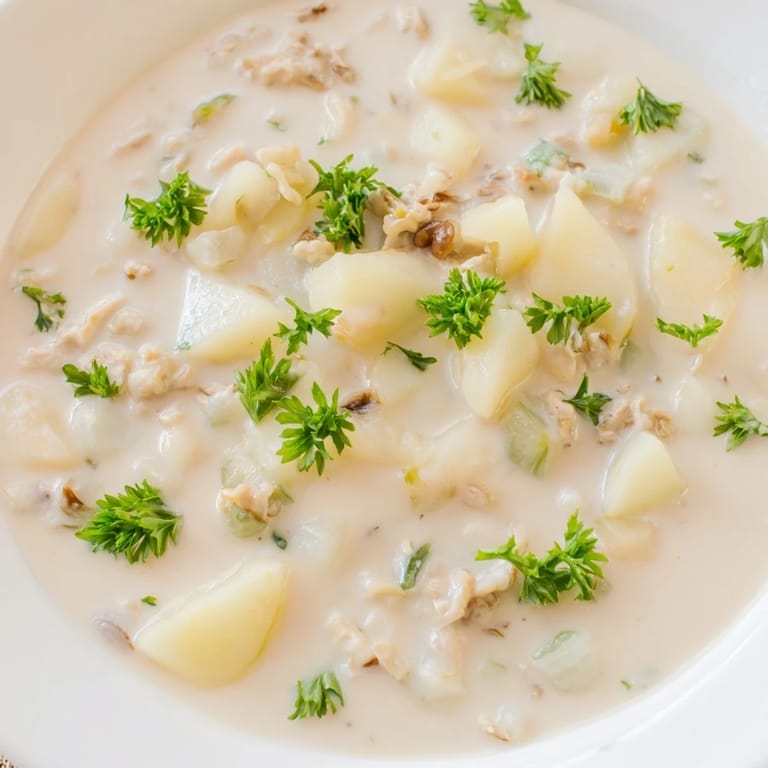
 This chowder is the kind of dish that tastes like home, no matter where you're actually sitting when you eat it. Make it once and you'll find yourself making it again.
Recipe FAQs
- → What clams work best for chowder?
Fresh clams steamed until opening yield the best flavor, but canned chopped clams can also be used, reserving the juice for broth depth.
- → How can I thicken the chowder?
Sautéing flour with vegetables creates a roux that thickens the broth, and mashing a few potatoes before adding cream can add extra body.
- → Can I substitute cream with something lighter?
Yes, half-and-half or milk can replace cream for a lighter texture, though it will be less rich.
- → What herbs enhance clam chowder flavor?
Bay leaf and dried thyme add subtle herbal notes that complement the clams and vegetables beautifully.
- → How should I serve chowder for best taste?
Serve hot garnished with fresh parsley alongside oyster crackers or crusty bread to soak up the creamy broth.