 Pin it
 There's something about the smell of cornbread baking that stops you mid-conversation. My grandmother's cast-iron skillet would come out every Sunday, and within minutes, the kitchen filled with this warm, golden aroma that meant comfort was minutes away. I didn't learn to make it from a recipe card—I learned it by standing beside her, watching how she'd let the pan get almost too hot, then pour in batter that seemed too thick until it spread into something golden and perfect. Now when I bake cornbread, I'm right back there, except this time I'm the one creating that smell for someone else.
I made this for a chili night during an unexpected cold snap, and my neighbor came over carrying nothing but hope and an appetite. When she tasted that first warm slice with melting butter, she actually closed her eyes—the kind of moment that reminds you food is really about connection. That batch taught me that cornbread doesn't need to be complicated or fussy to feel like a celebration.
Ingredients
- Yellow cornmeal: This is where the flavor and texture live—don't skip it or substitute with flour. The coarser texture gives you that signature grittiness that makes cornbread feel genuine.
- All-purpose flour: This keeps the crumb from becoming too heavy, balancing the cornmeal's density with a tender structure.
- Granulated sugar: A quarter cup feels right to me, but taste matters here—start with less if you're feeding someone who prefers savory, add more if honey is your love language.
- Baking powder and baking soda: These two work together to give you that quick rise and light texture that makes cornbread feel special, not dense.
- Sea salt: Don't skip this or underestimate it—salt amplifies everything good about cornbread and keeps the sweetness from feeling cloying.
- Whole milk: Buttermilk is wonderful if you have it, giving you a subtle tang that adds depth, but regular milk works beautifully too.
- Eggs: These bind everything while adding richness; they're non-negotiable.
- Melted butter and vegetable oil: The butter gives flavor, the oil keeps the crumb tender—using both is the secret to cornbread that stays soft even after it cools.
- Honey: Optional, but I often add it because that touch of floral sweetness changes everything.
Tired of Takeout? 🥡
Get 10 meals you can make faster than delivery arrives. Seriously.
One email. No spam. Unsubscribe anytime.
Instructions
- Heat your pan properly:
- Preheat the oven to 400°F and get your cast-iron skillet or square baking pan in there while it heats. A hot pan is the difference between a crispy, golden bottom and something that feels a bit bland and pale. If using cast iron, grease it well and let it get genuinely hot—you'll hear a gentle sizzle when the batter hits.
- Combine dry ingredients with intention:
- Whisk together cornmeal, flour, sugar, baking powder, baking soda, and salt in a large bowl. This step aerates everything and ensures the leavening agents are evenly distributed—skip whisking and you might get dense pockets.
- Mix wet ingredients until smooth:
- In a separate bowl, whisk milk, eggs, melted butter, oil, and honey until completely combined and smooth. This takes less than a minute but matters because you want even moisture throughout the batter.
- Fold wet into dry with restraint:
- Pour the wet mixture into the dry ingredients and stir gently with a spatula until just combined—this is crucial. Overmixing activates the gluten in the flour and creates a tough, dense cornbread instead of the tender crumb you're after. Stop stirring while you still see a few flour streaks; the residual mixing as you pour will take care of the rest.
- Pour and smooth:
- Carefully pour the batter into your hot pan and smooth the top with a spatula so it bakes evenly. If using cast iron, you'll hear a satisfying sizzle as the batter hits—that's the sound of the crust beginning to form.
- Bake until golden:
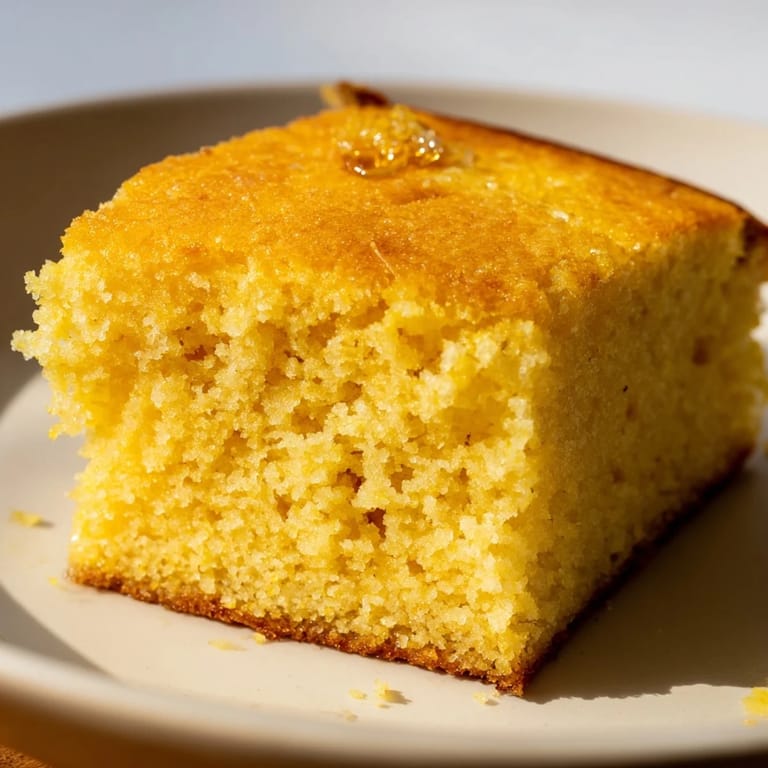
- Bake for 20 to 25 minutes, watching until the top is deeply golden and a toothpick inserted in the center comes out clean. The edges will pull away slightly from the pan, and the top will feel just barely firm when you touch it gently.
- Rest before slicing:
- Let it cool in the pan for 10 minutes—this gives the structure a chance to set. This patience is what separates crumbly cornbread from cornbread that slices cleanly into neat squares.
 Pin it
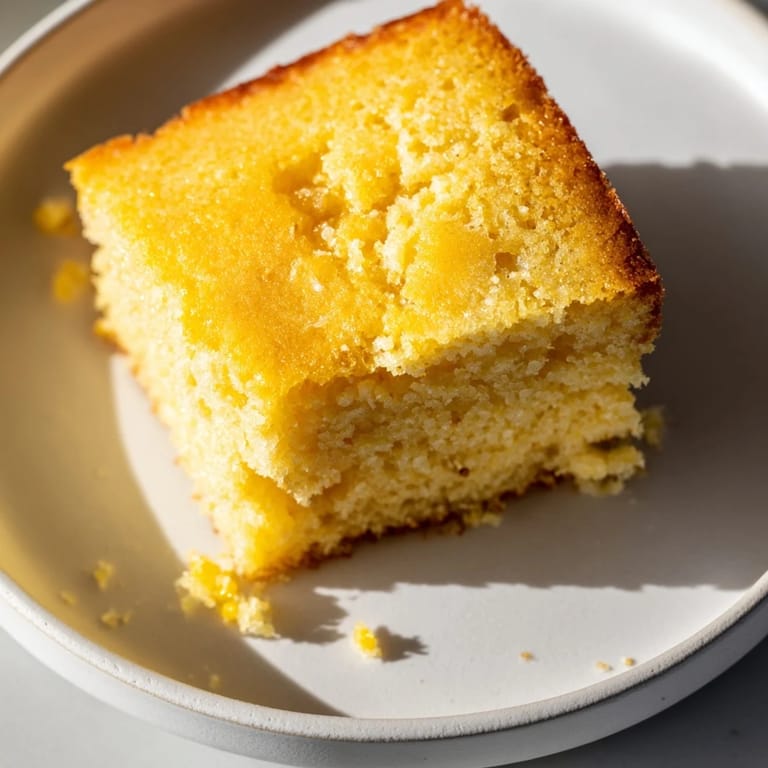
 There was a moment at a potluck where someone cut into my cornbread expecting something ordinary, and instead found this perfect balance of crispy outside and tender inside, with that barely-sweet flavor that made people go back for thirds. That's when I understood this isn't just a side dish—it's a small thing that can change how someone experiences a meal.
Variations That Keep This Interesting
Once you've made this classic version a few times, the variations start calling to you. A cup of sharp cheddar cheese folded into the batter turns this into something savory and rich, perfect alongside chili where every bite has little pockets of melted cheese. I've also stirred in chopped fresh scallions and a finely diced jalapeño, which adds brightness and heat without overwhelming the cornbread's essential character. These additions don't complicate the recipe—they just expand what's possible while keeping the same simple method.
What to Serve It With
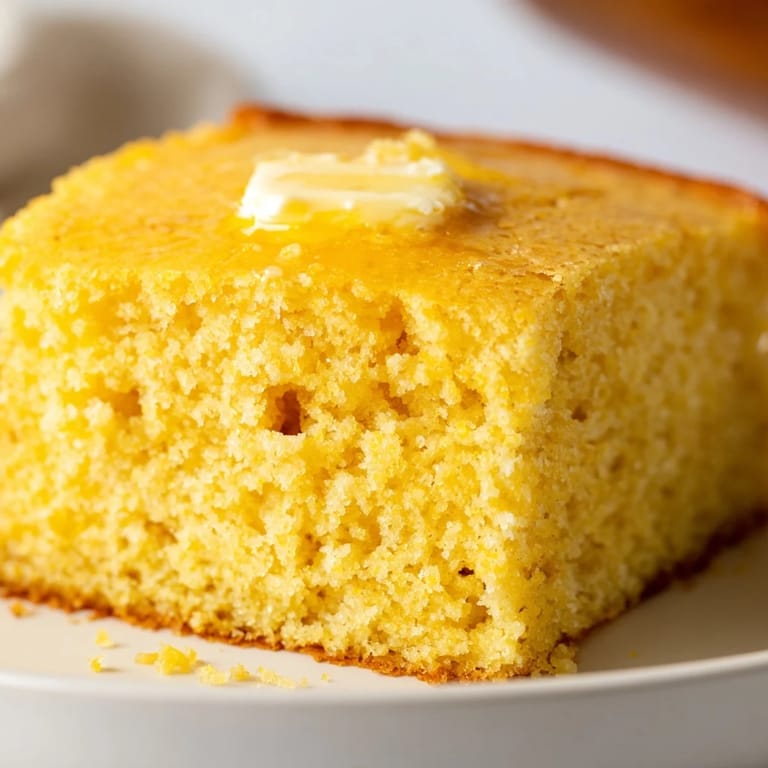
Cornbread is at its best when it's not alone on the plate. It's the perfect companion to chili, where the slight sweetness and tender crumb soak up all those deep, spiced flavors. Barbecue feels incomplete without it—the cornbread balances smoky, savory meat with something warm and a little bit sweet. Even simple soups transform when you have a slice of cornbread to tear into; the bread becomes part of the meal, not just decoration. Serve it warm, sliced thick, with a pat of honey butter melting into the top, and watch people's faces soften.
- Honey butter is non-negotiable; mix softened butter with a drizzle of honey and let it melt into warm cornbread.
- Cast-iron cornbread can be sliced right in the skillet and served directly from there, which feels more generous than plating.
- Leftover cornbread stays fresh for three days wrapped loosely, and tastes nearly as good slightly warmed the next day.
Making It Your Own
The beautiful thing about this recipe is how forgiving it is, how willing to bend toward your taste. If you love savory, reduce the sugar to two tablespoons and skip the honey. If sweetness is your preference, add an extra tablespoon of sugar and drizzle in a little more honey. For a gluten-free version that works beautifully, swap the all-purpose flour for a 1:1 gluten-free flour blend—the cornmeal carries enough structure that you won't notice the difference. The cornmeal, the method, the heat—these stay the same because they're what make cornbread cornbread. Everything else is room for your preferences.
- Buttermilk creates a tangier, slightly more complex cornbread if you have it on hand.
- A cast-iron skillet creates the best crust, but a square baking pan works perfectly fine and requires less seasoning.
- Don't be afraid to taste the batter before baking—it's safe because of the eggs, and it tells you immediately if you want more salt, sugar, or honey.
 Pin it
 Cornbread is one of those quiet recipes that doesn't ask for much but gives back generously. Once you've made it, you'll find reasons to keep making it—because some things belong on the table, and this is one of them.
Recipe FAQs
- → What type of cornmeal works best?
Yellow cornmeal provides a traditional flavor and texture with a slightly gritty bite that complements the bread's softness.
- → Can I substitute buttermilk instead of milk?
Yes, buttermilk adds a tangier flavor and tenderizes the crumb, enhancing the overall depth of taste.
- → What is the purpose of baking powder and baking soda in this bread?
They act as leavening agents, helping the dough rise and giving the cornbread a light and airy texture.
- → How can I make a savory variation?
Incorporate shredded cheddar cheese, chopped scallions, or diced jalapeños into the batter for a flavorful twist.
- → What pan is best for baking this bread?
An 8-inch square pan or a 9-inch cast-iron skillet works well to create an even golden crust and thorough cooking.
- → How do I know when the cornbread is done baking?
It’s ready when the top turns golden and a toothpick inserted in the center comes out clean.