 Pin it
 I stumbled into making bone broth seriously about three years ago when my knees started complaining after morning runs. A friend casually mentioned her grandmother's ritual of sipping warm broth every morning, and something about the simplicity stuck with me. That first batch I made was honestly forgettable—underseasoned, murky, more obligation than nourishment. But then I learned to layer flavors properly, to let ginger and turmeric do their quiet work over hours, and suddenly I was looking forward to my mornings again. This broth bowl became my way of saying yes to my body.
Last winter, I made this for my sister when she was recovering from a cold, and I'll never forget how she closed her eyes after that first sip. She didn't say anything, just exhaled like she'd been holding her breath for days. Now whenever family comes over feeling run-down or creaky, someone always asks if I'm making the broth. It's become the thing I make when words aren't enough.
Ingredients
- Bone broth (6 cups): This is your foundation—the collagen, gelatin, and minerals that make this bowl actually transformative rather than just warm and pleasant. Homemade is best, but quality store-bought works when life gets busy.
- Yellow onion, quartered: Adds subtle sweetness and helps pull minerals from the other ingredients, though you'll strain it out later anyway.
- Garlic cloves, smashed: Crushing rather than mincing releases more compounds and makes them easier to fish out at the end.
- Fresh ginger and turmeric: The anti-inflammatory powerhouse—I learned the hard way that fresh is absolutely worth the hunt, and that thumb-sized piece matters more than you'd think.
- Apple cider vinegar: Those two tablespoons do something almost alchemical, helping your body actually absorb all those minerals you're simmering for hours.
- Black peppercorns: A whole teaspoon means you get the flavor without grittiness, and they're easier to spot and remove.
- Sea salt: Tastes like the ocean in a way that regular salt just doesn't, and your body recognizes it faster.
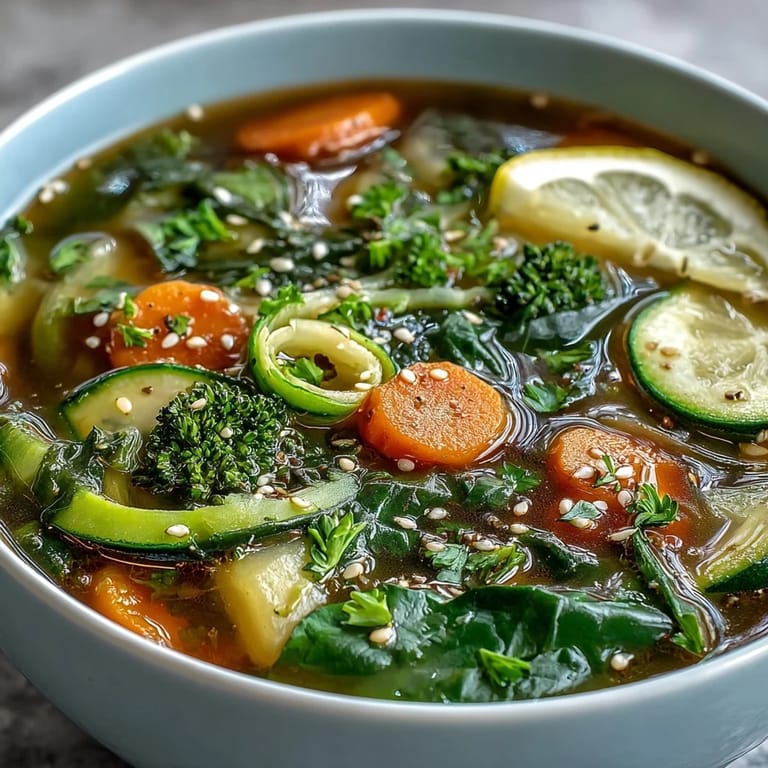
- Carrots and celery: The classic supporters—they add earthiness and natural sweetness that makes the whole bowl feel complete rather than just herbal.
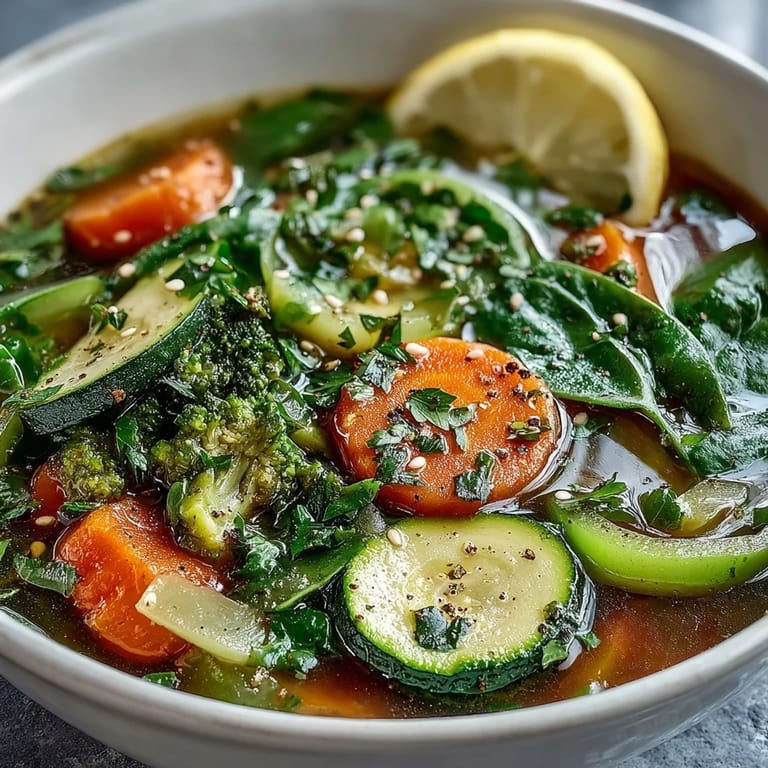
- Broccoli florets: Adds texture and those green notes that keep everything bright and fresh-tasting.
- Zucchini: Mild and delicate, it wilts into the broth without overwhelming it.
- Baby spinach: Added at the very end so it stays vivid and doesn't turn to mush, keeping each bowl look as good as it tastes.
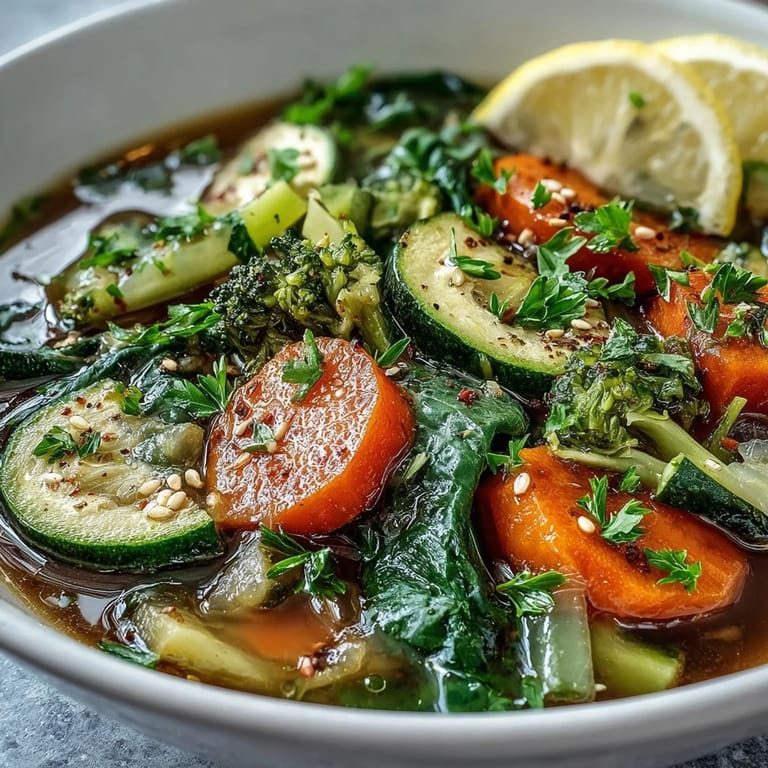
- Fresh parsley or cilantro: One of those garnishes that sounds optional until you taste the difference—it wakes everything up at the last second.
- Sesame seeds and lemon: Both optional but genuinely transformative, adding nuttiness and brightness that make people wonder why they haven't been making this forever.
Tired of Takeout? 🥡
Get 10 meals you can make faster than delivery arrives. Seriously.
One email. No spam. Unsubscribe anytime.
Instructions
- Build your flavor base:
- Combine the broth with onion, garlic, fresh ginger, turmeric, apple cider vinegar, peppercorns, and salt in your largest stockpot. Bring it to a gentle boil over medium-high heat—you want to see bubbles dancing across the surface, not an aggressive rolling boil that makes your kitchen smell like science class.
- Let time do the work:
- Reduce the heat to low, cover the pot, and let it simmer for 1.5 hours while you go about your day. This isn't rushed; the longer those aromatics steep, the more your body will thank you when you drink it.
- Reveal your golden liquid:
- Using a fine mesh sieve, carefully strain out all the solids—onion, garlic, ginger pieces, peppercorns. You're left with a clear, deeply flavored broth that looks like liquid gold if the light hits it right. Return it to the pot for the next step.
- Add the vegetables strategically:
- Start with carrots, celery, and broccoli—the ones that need a bit of time to soften. Simmer them for exactly 10 minutes; this is where I learned not to overcook because wilted broccoli is sad broccoli.
- Finish with delicate greens:
- Add zucchini slices and spinach, simmering for just 2-3 minutes. The zucchini needs that time, but the spinach will wilt almost instantly if you're not watching. You want everything to stay vibrant and slightly tender, not exhausted.
- Taste and trust yourself:
- Always taste before serving and adjust salt if needed—your palate knows what your body needs better than any recipe ever could.
- Serve with intention:
- Divide the broth and vegetables among bowls, then scatter fresh herbs, sesame seeds, and a squeeze of lemon across the top. This final step isn't fussy; it's showing respect to something that took time and care to create.
 Pin it
 My partner used to joke that I was running a wellness spa in our kitchen, but then his aching shoulders stopped bothering him so much. He stopped joking. Now he's the one texting me recipe questions, and I know the broth won because he started asking for seconds not out of politeness, but because his body actually felt better after drinking it.
Timing Your Ingredients Like a Pro
The secret nobody talks about is that vegetables don't all cook at the same speed, and pretending they do ruins the whole experience. Carrots are dense and need actual time; broccoli is somewhere in the middle; zucchini barely needs any time at all; and spinach will wilt if you look at it too hard. I used to dump everything in at once and wondered why some bites were perfect and others were either crunchy or mushy. Once I started respecting these differences, the broth became something I actually craved rather than something I forced myself to eat because I knew it was good for me.
Making This Bowl Your Own
The vegetables listed here are a suggestion, not a mandate. Bok choy is gorgeous in winter; mushrooms add earthiness in fall; kale holds up better than spinach if you're batch-prepping. The only rule I've learned is to think about texture and timing—delicate things go in near the end, sturdy things need more time. I've made this bowl with about fifteen different vegetable combinations, and the broth makes every single one taste intentional and nourishing.
Elevating Your Bowl Without Overthinking It
The magic happens in the final moments right before you eat it. Fresh herbs aren't decoration; they're the last word the bowl gets to speak. Lemon juice doesn't just brighten flavor—it actually helps your body absorb the minerals from everything you just simmered. Sesame seeds add nuttiness and a tiny texture element that makes your brain sit up and notice you're doing something nice for yourself. This is where the bowl stops being just broth with vegetables and becomes something you'd actually choose to make for yourself, not just because it's healthy.
- Keep lemon wedges on the table so people can squeeze exactly as much brightness as they want into their own bowls.
- Toast your sesame seeds in a dry pan for thirty seconds right before sprinkling them—they taste completely different and worth the extra minute.
- If you're making this for guests, let them choose their own garnishes because it makes the whole experience feel like self-care rather than being force-fed wellness.
 Pin it
 This broth became the thing I reach for when I need to feel taken care of, or when I want to take care of someone else. That's when you know a recipe matters.
Recipe FAQs
- → What makes this broth bowl collagen-boosting?
The bone broth base is naturally rich in collagen, which breaks down during the slow-simmering process. Combined with black pepper to enhance turmeric absorption, this bowl delivers optimal collagen and anti-inflammatory benefits.
- → Can I make this bowl vegetarian?
Absolutely. Simply substitute the bone broth with high-quality mushroom broth or vegetable broth. Mushroom broth particularly works well as it provides a rich, umami depth that complements the ginger and turmeric beautifully.
- → How long does the broth keep in the refrigerator?
The prepared broth bowl will keep for 4-5 days when stored in an airtight container in the refrigerator. The flavors often develop and deepen after a day or two. Reheat gently on the stovetop to preserve the nutrients in the vegetables.
- → Can I freeze this broth bowl?
Yes, freeze the broth without the delicate vegetables like spinach and zucchini for up to 3 months. When ready to serve, thaw and reheat, then add fresh vegetables for the best texture and nutrient retention.
- → What vegetables work best in this bowl?
Root vegetables like carrots, parsnips, and daikon radish hold up well during simmering. Leafy greens such as kale, bok choy, or spinach add nutrition at the end. Feel free to use whatever seasonal vegetables you have on hand.
- → Why add apple cider vinegar to the broth?
Apple cider vinegar helps extract minerals and collagen from the broth ingredients during the simmering process. It also adds a subtle tang that balances the earthiness of turmeric and ginger while supporting digestion.