 Pin it
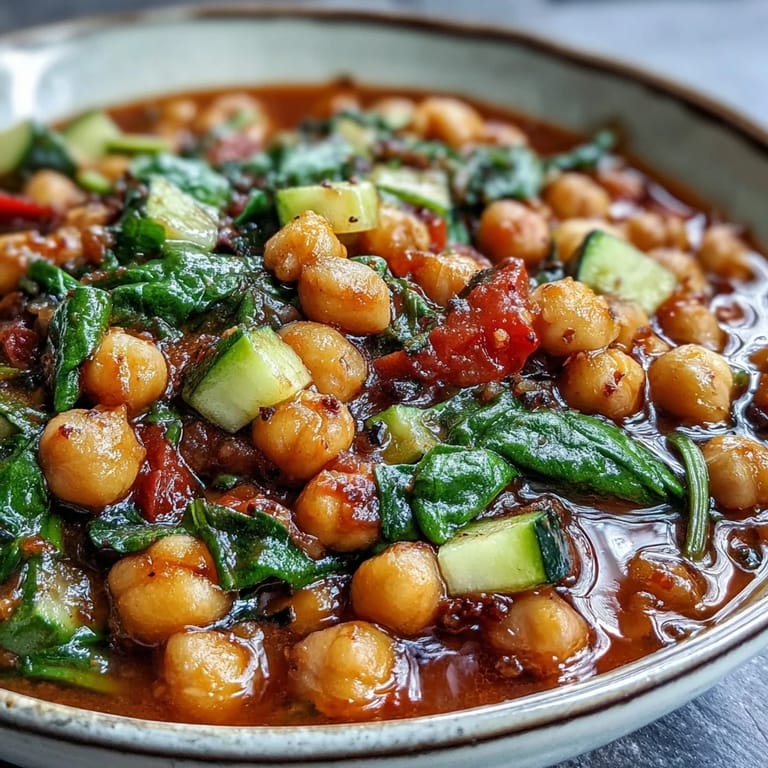
 I used to avoid chickpeas because they felt like a placeholder ingredient until a rainy Tuesday in October. I was shivering after a long walk home and found nothing in the pantry but a dusty can and some wilted carrots. My kitchen smelled like rain and damp wool before the cumin hit the hot oil. That single pot changed my entire perspective on what a humble legume could accomplish. Now this stew is my go to remedy for gray skies and tired spirits.
I remember serving this to my sister when she was convinced she hated vegan food. We sat on my tiny balcony wrapped in blankets while the steam from the bowls rose into the cool night air. She finished two helpings before even asking what was in the pot. It was one of those rare moments where the conversation flowed as easily as the broth. That night proved that good food transcends any dietary label or expectation.
Ingredients
- 2 cups (340 g) Cooked Chickpeas: These legumes provide a satisfying texture and absorb the complex flavors of the broth.
- 1 medium Onion: Sautéing the onion until it is golden creates a sweet foundation for the savory spices.
- 2 cloves Garlic: Fresh garlic adds a sharp and aromatic punch that deepens the overall flavor of the stew.
- 2 Carrots: These add a natural sweetness and stay firm enough to provide a nice bite in every spoonful.
- 2 stalks Celery: This contributes an earthy base note that is essential for a well rounded vegetable broth.
- 1 Red Bell Pepper: This brings a beautiful color and a mild sweetness that balances the earthy cumin.
- 1 Zucchini: I like to add this late so it retains its shape and bright green color.
- 1 cup (150 g) Fresh Spinach: This delicate leaf wilts quickly and adds a lovely silkiness to the final bowl.
- 1 can (400 g) Diced Tomatoes: They provide the necessary acidity to brighten up the heavy Mediterranean spices.
- 4 cups (1 liter) Vegetable Broth: A high quality broth acts as the glue that binds all these individual flavors together.
- 2 tbsp Olive Oil: This helps to bloom the spices and gives the stew a rich mouthfeel.
- 1 tsp Ground Cumin: This is the soul of the dish and provides a smoky warmth that defines the flavor.
- 1 tsp Smoked Paprika: It adds a deep red color and a hint of fire without being too spicy.
- 1/2 tsp Ground Turmeric: This spice is famous for its vibrant color and its subtle woody notes.
- 1/2 tsp Ground Coriander: It offers a light and floral finish that prevents the stew from feeling too heavy.
- 1/2 tsp Black Pepper: A small amount adds a slow heat that lingers pleasantly on the palate.
- 3/4 tsp Salt: This essential mineral draws out the natural juices from the vegetables while they cook.
- 1 Bay Leaf: Leaving this in the pot while it simmers adds a hidden layer of herbal complexity.
Tired of Takeout? 🥡
Get 10 meals you can make faster than delivery arrives. Seriously.
One email. No spam. Unsubscribe anytime.
Instructions
- Sauté the aromatics:
- Warm up your oil and let the onions soften until they look like little translucent jewels. They should be fragrant and soft before you move on.
- Add the vegetables:
- Toss in the garlic and carrots and celery and peppers to let them glisten in the oil. Stir them occasionally so they soften evenly without browning too quickly.
- Toast the spices:
- Stir in the cumin and paprika and turmeric and coriander and pepper and salt. Let them cook for just one minute until the aroma fills your entire kitchen.
- Simmer the base:
- Pour in the chickpeas and the vegetable broth along with the diced tomatoes and the bay leaf. Let the pot reach a boil then turn it down to a low bubble for twenty minutes.
- Add the zucchini:
- Drop in the green coins of zucchini and let them simmer until they are just soft enough to pierce with a fork. This usually takes about seven minutes of gentle cooking.
- Fold in the greens:
- Stir the spinach into the hot liquid and watch it collapse into the broth before you pull the bay leaf out. The residual heat is enough to wilt the leaves perfectly.
- Final seasoning:
- Taste the broth and add a little more salt if the flavors do not pop yet. Serve it hot in large bowls with your favorite garnishes.
 Pin it
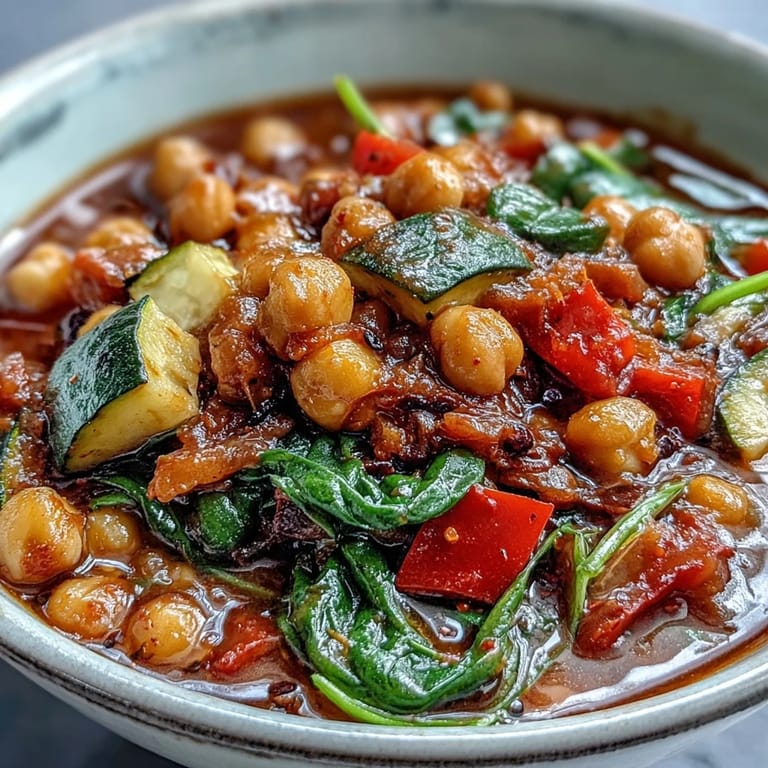
 Last winter I made a double batch of this when the power went out during a snowstorm. We cooked it over a small camping stove and ate it by candlelight while the wind howled outside. The smell of smoked paprika seemed to make the room feel five degrees warmer. Every bite was a reminder that simple ingredients can provide the most comfort when things get chaotic. It has been a household staple ever since that cold night.
The Magic of Leftovers
This stew actually tastes better the next morning after the spices have had time to settle into the chickpeas. I often find myself eating it cold straight from the fridge while standing in the kitchen light. The liquid thickens up and becomes almost like a rich sauce for the vegetables. It makes the perfect lunch for a busy workday when you need something substantial.
Choosing Your Greens
While I love the way spinach disappears into the broth you can experiment with heartier leaves too. Kale or Swiss chard work beautifully if you add them a few minutes earlier to let them soften properly. Each green leaf brings a slightly different mineral note to the final bowl. I usually just use whatever looks the most vibrant at the local market that morning.
Finishing Touches
The way you finish the dish is just as important as the simmering process. Small additions can transform the entire flavor profile in seconds. I always keep these three things nearby when the pot is almost finished.
- Squeeze a fresh lemon wedge over the top just before eating to brighten the heavy spices.
- Sprinkle a handful of flat leaf parsley to add a fresh peppery finish to the dish.
- Add a pinch of red chili flakes if you want a little hum of heat in the back of your throat.
 Pin it
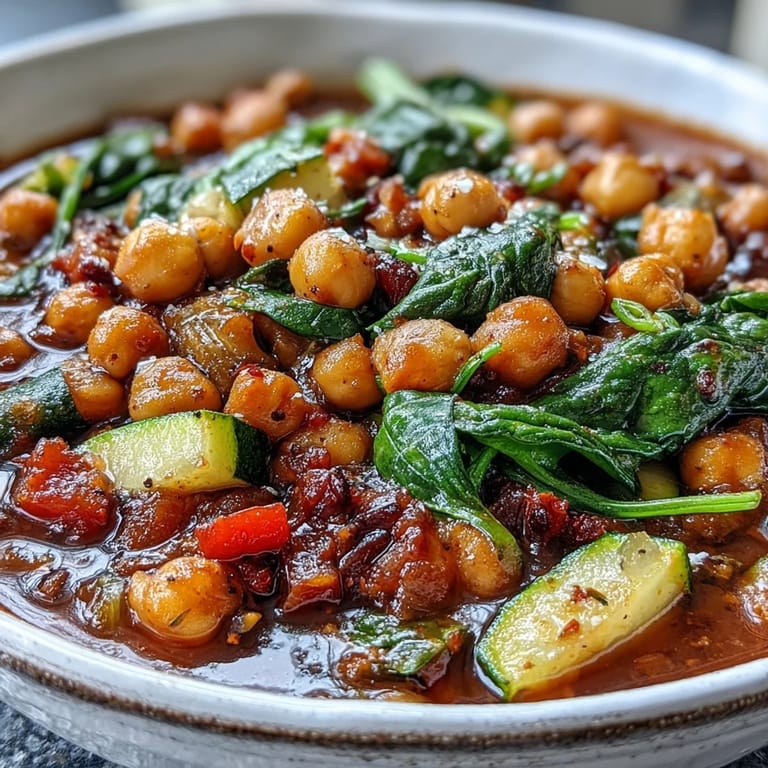
 This stew is a quiet celebration of simple pantry staples and fresh greens. I hope it brings as much warmth to your kitchen as it does to mine.
Recipe FAQs
- → Can I use dried chickpeas instead of canned?
Absolutely. Soak 1 cup dried chickpeas overnight, then simmer for about 1-2 hours until tender before adding to the stew. You'll need about 2 cups cooked chickpeas total.
- → How long does this stew keep in the refrigerator?
Stored in an airtight container, this stew keeps well for 4-5 days in the refrigerator. The flavors actually develop and improve after a day or two.
- → Can I freeze this chickpea stew?
Yes, this freezes beautifully. Cool completely before transferring to freezer-safe containers. It will keep for up to 3 months. Thaw overnight in the refrigerator before reheating.
- → What vegetables can I substitute?
Feel free to swap vegetables based on what's in season. Eggplant, butternut squash, sweet potatoes, or green beans all work wonderfully. Kale or Swiss chard can replace the spinach.
- → How can I make this stew more protein-rich?
Consider adding a cup of red lentils during the simmering stage, or stir in some white beans like cannellini. Serving over quinoa or with a side of protein also boosts nutritional value.
- → Is this stew spicy?
The spices provide warmth rather than heat. If you prefer some spice, add the optional pinch of chili flakes mentioned in the notes, or include a diced jalapeño with the vegetables.