 Pin it
 There's something about the smell of sautéed garlic and onions hitting the kitchen on a chilly afternoon that makes everything feel like it's going to be okay. My neighbor Marco taught me that minestrone isn't really a recipe so much as a conversation between you and whatever vegetables are sitting in your crisper drawer. He'd shrug and say the Italians never measure twice, and somehow that permission to improvise made me love cooking it even more.
I made this for my sister the week she moved into her first apartment, and watching her eat it straight from the pot while sitting on moving boxes made me realize food is mostly about showing up for people. She still texts me photos of her version with different vegetables, and somehow that feels like the highest compliment.
Ingredients
- Olive oil: Use a good quality one you wouldn't be ashamed to drizzle over bread, because it's the foundation that everything else builds on.
- Onion, garlic, carrots, and celery: This aromatic base is what Italians call soffritto, and it's where the flavor actually lives.
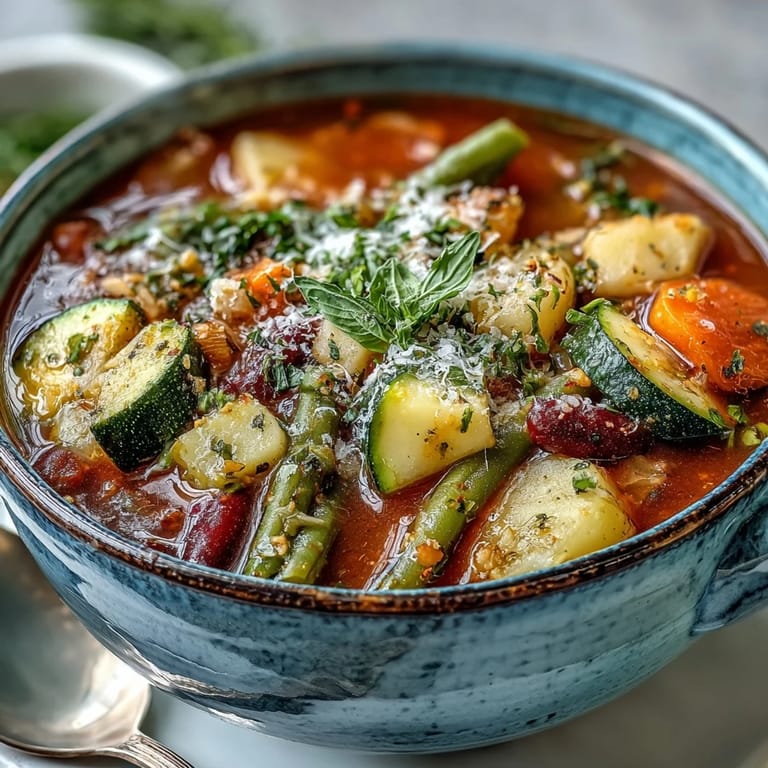
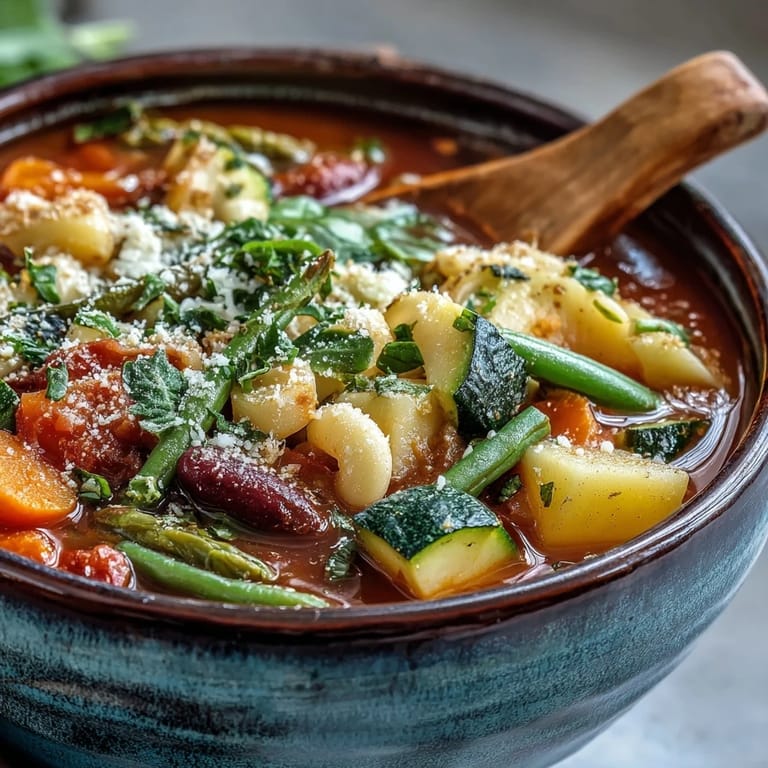
- Zucchini, potato, and green beans: These vegetables keep their shape and add different textures, so don't skip them thinking they're interchangeable.
- Diced tomatoes with juices: The liquid matters as much as the tomato itself, so never drain them away.
- Vegetable broth and water: Broth alone can be too intense, so the water dilutes it to something that lets the vegetables shine.
- Cannellini beans: Canned is perfectly fine here and honestly saves the evening from becoming complicated.
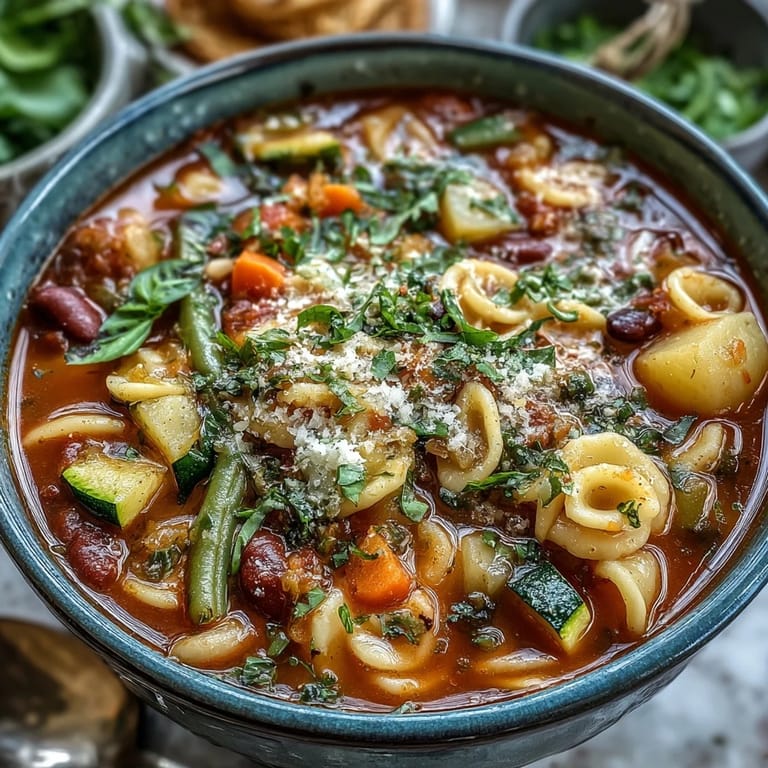
- Small pasta (ditalini or elbow macaroni): Tiny shapes catch the broth and feel luxurious in a humble way.
- Dried oregano and basil: These get added early so they have time to wake up and bloom in the heat.
- Bay leaf: Just one, and you'll actually remember to fish it out at the end.
- Salt, pepper, and fresh parsley: Fresh herbs at the end remind you this soup is alive and not something that's been sitting around.
- Fresh basil (optional) and Parmesan: These are the grace notes that turn something good into something people ask you to make again.
Tired of Takeout? 🥡
Get 10 meals you can make faster than delivery arrives. Seriously.
One email. No spam. Unsubscribe anytime.
Instructions
- Start with warmth and fragrance:
- Pour olive oil into your pot and let it get properly hot before the onion goes in. The sizzle matters because it's telling you the temperature is right. Sauté the onion and garlic until they look translucent and the kitchen smells like something worth waiting for.
- Build the vegetable foundation:
- Add your carrots, celery, zucchini, potato, and green beans, stirring them around for about five minutes. You want them to soften just slightly and release their fragrance, not cook all the way through yet.
- Create the flavorful broth:
- Pour in the tomatoes with all their liquid, then add the vegetable broth and water. Stir in your dried oregano, basil, bay leaf, salt, and pepper. Bring everything to a boil so you can see the surface beginning to bubble.
- Let it simmer gently:
- Turn the heat down, cover the pot, and let it cook for fifteen minutes. This is when you can step away and do something else, knowing the vegetables are becoming tender and the flavors are finding each other.
- Add the beans and pasta:
- Uncover the pot and stir in your drained cannellini beans and pasta. Continue cooking without the lid for about ten to twelve minutes, stirring occasionally so nothing sticks to the bottom. The pasta will absorb the broth as it cooks, which is exactly what you want.
- Finish with fresh life:
- Fish out the bay leaf, then stir in your fresh parsley and basil if you have it. Taste it and add more salt or pepper if your palate says so. This final moment of seasoning is where you make it your own.
- Serve with generosity:
- Ladle it into bowls and grate Parmesan over the top if that's your style. The soup is best when it's steaming and you have time to actually sit with it.
 Pin it
 My mother always said minestrone was the soup that apologized for nothing. It showed up as it was, honest and full, asking you to meet it where it stood instead of pretending to be something fancier.
Seasonal Variations That Actually Matter
Winter begs for heartier vegetables like kale, cabbage, or spinach stirred in at the very end so they keep their color and slight chew. Spring is when you swap in fresh peas and thinner green beans, which cook faster and taste somehow more delicate. Summer minestrone loves zucchini and yellow squash because they're everywhere and cheap, and you can add them with confidence. Fall is the time for butternut squash cut small, or fresh herbs from the garden that remind you why you planted them in the first place.
Making It Your Own
The beauty of minestrone is that it's forgiving enough to handle your changes and confident enough that it won't fall apart. If you have pancetta or a ham bone sitting around, add it with the soffritto for something richer. If you're cooking for someone vegetarian, leave it out entirely and the soup won't miss it. If you want protein without meat, add an extra can of beans or use lentils that you've cooked separately so they don't fall apart into nothing.
The Small Moments That Make It Better
When you're standing at the stove and the aroma hits you, that's the moment you know it's working. Listen for the gentle bubble of the simmer, not a rolling boil that wastes energy and cooks things too fast. The pasta should have some resistance when you bite it, not dissolve like it never existed. Taste as you go because your palate is smarter than any recipe, and salt becomes more generous as the broth reduces and concentrates.
- Crush a small piece of the cooked potato between your tongue and the roof of your mouth to check if the vegetables are done.
- Keep a ladle nearby so you can taste the broth as it develops and adjust the seasoning before it's too late.
- Save a little pasta water if you need to loosen things up at the end, though honest minestrone should never be thick.
 Pin it
 This soup asks nothing of you except attention and basic kindness, and somehow that's exactly what feeds people best. Make it, share it, and watch how quickly it becomes someone's comfort food.
Recipe FAQs
- → What vegetables work best in this soup?
Classic vegetables include onions, carrots, celery, zucchini, potatoes, and green beans. You can also add spinach, kale, cabbage, or Swiss chard based on seasonality and preference.
- → Can I make this gluten-free?
Yes, simply substitute regular pasta with gluten-free pasta alternatives such as rice pasta, corn pasta, or chickpea pasta. All other ingredients are naturally gluten-free.
- → How long does this soup keep in the refrigerator?
Store in an airtight container for up to 4 days. The pasta may absorb more liquid over time, so add a splash of water or broth when reheating. This soup also freezes well for up to 3 months.
- → Can I use dried beans instead of canned?
Absolutely. Soak 1 cup dried cannellini beans overnight, then simmer until tender before adding to the soup. This method takes longer but yields excellent texture and flavor.
- → What pasta shapes are traditionally used?
Small pasta shapes like ditalini, elbow macaroni, small shells, or tubetti work best. These shapes hold up well during simmering and are easy to scoop up with each spoonful.
- → How can I add more protein?
Incorporate extra beans, add diced pancetta or prosciutto while sautéing the aromatics, or stir in some shredded chicken near the end of cooking time.