 Pin it
 My grandmother kept her pecan pie recipe written on the back of an old grocery store receipt, the paper yellowed and smudged from decades of flour dust. She'd pull it out each Thanksgiving, reading it more from habit than necessity, her hands already knowing exactly what to do. The first time I watched her make it, I was struck not by the complexity but by the quiet confidence in each movement—the way she'd pause before adding the eggs, letting the syrup cool just enough to feel slightly warm on her inner wrist. That pie became my standard for what Southern cooking should feel like: unpretentious, deeply satisfying, and tasting like someone actually cared enough to get it right.
I made this for a potluck once where everyone was supposed to bring something homemade, and I watched a coworker's face completely change when she tasted it—the kind of surprise that comes when food actually tastes the way it's supposed to. She asked for the recipe before she'd even finished her slice, and I realized then that this pie isn't just dessert; it's the kind of thing that makes people feel looked after.
Ingredients
- All-purpose flour: The foundation of a crust that should shatter delicately under your fork, so don't skip chilling the dough—cold butter is what creates those precious layers.
- Cold unsalted butter: Cut it into small cubes and keep it cold right up until mixing; warm butter turns your crust dense and tough instead of flaky and tender.
- Ice water: Add it slowly, one tablespoon at a time, because you're looking for a dough that just barely holds together, not a smooth ball.
- Light brown sugar: This is the backbone of the filling's flavor, giving you that deep caramel note that regular sugar can't quite match.
- Light corn syrup: It creates the signature gooey texture that makes pecan pie so distinctive, and it prevents the filling from crystallizing as it cools.
- Melted butter: Let it cool before adding to the eggs, or you'll end up cooking them prematurely and creating a grainy filling instead of a smooth custard.
- Large eggs: They're what bind the whole filling together and give it structure, so use room-temperature eggs if you can—they incorporate more smoothly.
- Pecan halves: Toast them first if you want deeper flavor, though raw pecans work beautifully too and let the buttery custard be the star.
Tired of Takeout? 🥡
Get 10 meals you can make faster than delivery arrives. Seriously.
One email. No spam. Unsubscribe anytime.
Instructions
- Make the crust:
- Whisk your flour, salt, and sugar together, then cut in the cold butter until everything looks like coarse sand—this takes about five minutes of patient work with a pastry cutter or your fingertips. Add ice water slowly, stirring just until the dough barely holds together, then shape it into a disk, wrap it, and let it rest in the fridge for at least 30 minutes.
- Shape and fit:
- Roll your chilled dough out on a lightly floured surface into a circle about 12 inches across—it should be thin enough to see light through it but sturdy enough not to tear. Fit it gently into your pie dish, trim away the excess, and crimp the edges however feels natural to your hands.
- Preheat and prepare:
- Set your oven to 350°F while you move forward, giving it time to reach temperature by the time you're ready to bake.
- Build the filling:
- In a large bowl, whisk together your brown sugar, corn syrup, and cooled melted butter until it looks smooth and glossy, then add your eggs one at a time, whisking gently between each addition. Stir in the vanilla and salt, then fold in your pecans carefully so they're evenly distributed.
- Fill and bake:
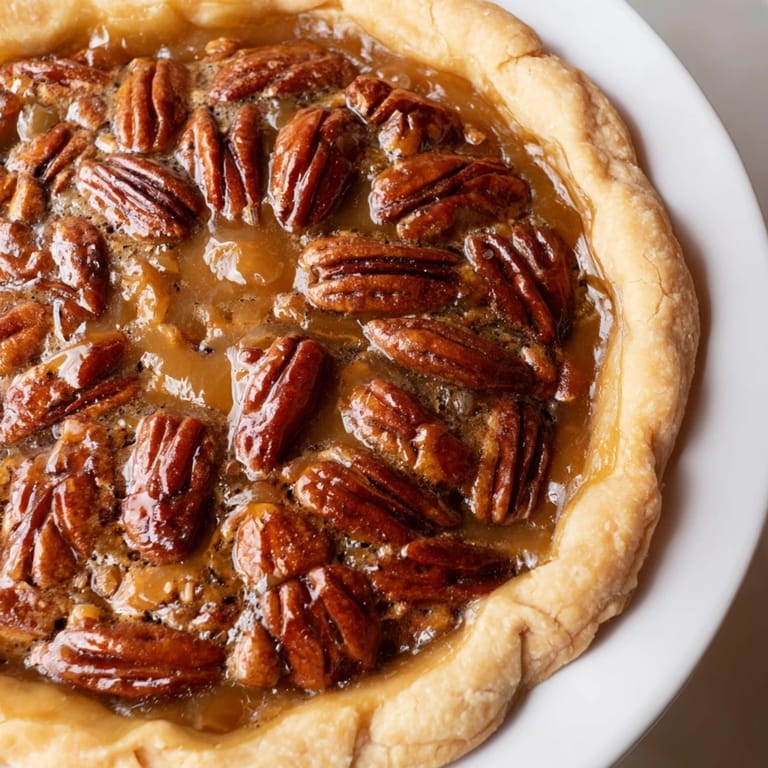
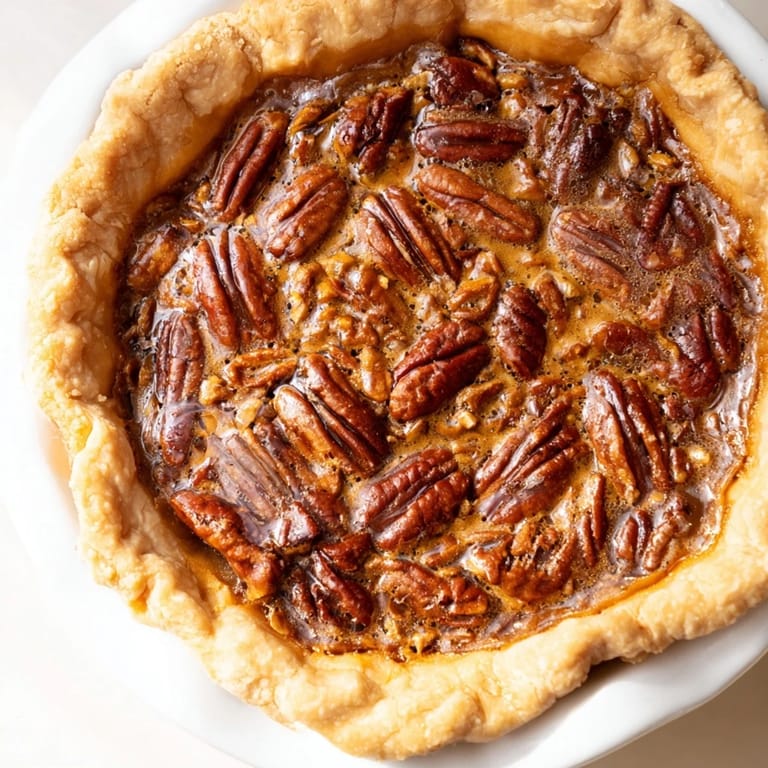
- Pour the filling into your prepared crust and slide it into the preheated oven. Bake for 50 to 55 minutes—you're looking for the center to be mostly set but still just slightly wobbly when you gently shake the pan, and if the crust starts browning too quickly, lay a piece of foil loosely over the top.
- Cool completely:
- Let the pie cool all the way down on a wire rack before you slice into it; this lets the filling firm up properly and makes serving much cleaner.
 Pin it
 There's a moment, about halfway through cooling, when the smell of pecan pie fills your whole kitchen and your willpower starts crumbling before the pie does. I've learned to make this earlier in the day so I'm not staring at it for hours, but I'm also honest enough to admit that the first slice tastes better eaten straight from the cooling rack, while it's still warm and the flavors haven't quite settled yet.
The Crust Matters More Than You Think
A good pecan pie crust is a vehicle for the filling, but a great crust is worth the extra attention. The difference between a crust that's tender and flaky versus one that's tough and dense comes down to temperature and restraint—keeping your butter cold, not overworking the dough, and letting it rest long enough for the gluten to relax. I've found that if I chill my bowl and even my measuring cups before making the dough, the whole process feels less rushed, and the results taste noticeably better. It's one of those baking moments where slowing down actually saves you time in the end.
Customize Without Losing the Soul
While pecan pie is perfect as written, I've found small tweaks that feel authentic rather than gimmicky. A pinch of cinnamon in the filling adds warmth without announcing itself, and toasting your pecans beforehand deepens their flavor in a way that feels intentional. Some people swear by a splash of bourbon or a tiny bit of maple syrup, and these work beautifully—just remember you're complementing the pie, not redesigning it. The filling-to-crust ratio is sacred, though; that's the one thing I never mess with.
Serving and Storage Wisdom
Pecan pie is best served the day it's made, when the contrast between the crispy crust and gooey filling is most pronounced. If you do have leftoover—which is rare in my house—store it covered at room temperature for a day or in the fridge for up to three days, and give it a gentle reheat at 300°F if you want to restore some of that warm, melting texture. Room-temperature slices with whipped cream or vanilla ice cream are the only acceptable serving method, and anyone who tells you different hasn't tasted a truly good pecan pie.
- Cool the pie completely before slicing, or your filling will spill out in a gorgeous but unpresentable mess.
- A sharp knife dipped in hot water and wiped clean between each slice makes cutting look professional instead of rough.
- Make this the day before a gathering if you want to reduce stress—it actually reheats beautifully and tastes even better the next day.
 Pin it
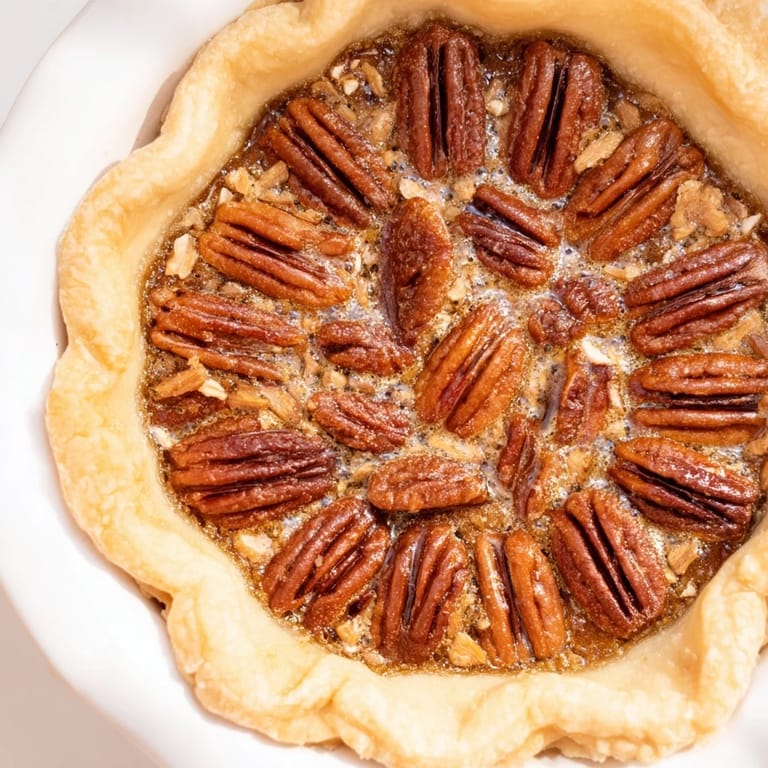
 Every time I make pecan pie, I'm reminded that the best recipes are the ones that taste like care, and this one absolutely does. It's the kind of dessert that brings people together, makes them slow down, and asks for seconds.
Recipe FAQs
- → How do I make the crust flaky?
Use cold, cubed butter and handle the dough minimally. Incorporate ice water gradually to bring the dough together without overmixing. Chill before rolling out.
- → Can I enhance the pecan flavor?
Toasting the pecans in a dry skillet for 5 minutes before adding to the filling intensifies their nutty aroma and flavor.
- → What can I do if the crust edges brown too quickly?
Cover the crust edges with foil during baking to prevent over-browning while the filling cooks through evenly.
- → Is corn syrup necessary for the filling?
Corn syrup adds sweetness and helps create a smooth, gooey texture, but golden syrup can be used as a substitute if preferred.
- → How should this dessert be served?
Allow to cool completely on a wire rack before slicing. It pairs wonderfully with whipped cream or vanilla ice cream to balance richness.