 Pin it
 The sound of a spoon tapping the rim of a pot used to mean my mother was adjusting the salt. One rainy Tuesday, I watched her taste a simmering broth three times before nodding to herself. That quiet ritual taught me more about cooking than any written recipe ever could. This coconut broth dish came from a similar moment of tasting, adjusting, and trusting my instincts when the kitchen smelled just right.
I first made this on a Wednesday night when the fridge was nearly empty and I had four people coming over in an hour. The coconut milk can had been sitting in the pantry for months, and I found udon noodles tucked behind a bag of rice. What started as a scramble turned into something everyone asked for again, and I realized that some of the best meals happen when you stop planning and start improvising.
Ingredients
- Cod fillets: Choose fillets that smell clean and ocean fresh, not fishy, and make sure they are skinless so they poach evenly without curling.
- Neutral oil: Canola or sunflower oil lets the aromatics shine without adding competing flavors, and it heats evenly for sautéing the onions.
- Onion: Slice it thin so it melts into the broth and adds sweetness without chunky bites that distract from the fish.
- Garlic and ginger: Fresh is essential here because the broth depends on their bright, clean heat to balance the richness of coconut milk.
- Red chili: This is optional, but even half a chili adds a gentle warmth that makes the bowl feel alive instead of flat.
- Red curry paste: A tablespoon is enough to add depth and complexity, but taste your brand first because some are much spicier than others.
- Coconut milk: Use full fat coconut milk for a creamy, silky broth that clings to the noodles and fish instead of tasting watery.
- Fish or vegetable stock: This thins the coconut milk just enough and adds savory backbone, so the broth does not taste one dimensional.
- Fish sauce and soy sauce: Together they bring umami and salt, but add them gradually because you can always add more and never take it back.
- Lime juice: Fresh lime juice brightens everything at the end and cuts through the richness, so do not skip it or use bottled.
- Udon noodles: Fresh udon noodles are thick and chewy, and they soak up the broth without falling apart like thinner noodles sometimes do.
- Baby spinach: It wilts in seconds and adds color and a bit of earthiness without needing any prep beyond a rinse.
- Carrot: Julienned carrot adds crunch and a touch of sweetness, and it looks beautiful floating in the broth.
- Shiitake mushrooms: Sliced shiitakes add a meaty texture and deep flavor that makes the broth taste richer and more satisfying.
- Spring onions and coriander: Fresh herbs and alliums at the end add brightness and make each bowl feel vibrant and just finished.
Tired of Takeout? 🥡
Get 10 meals you can make faster than delivery arrives. Seriously.
One email. No spam. Unsubscribe anytime.
Instructions
- Build the aromatic base:
- Heat the oil in a large saucepan over medium heat and add the sliced onion, stirring occasionally until it softens and turns translucent after about 3 minutes. Stir in the garlic, ginger, and chili, letting them cook for just 1 minute until the kitchen smells warm and fragrant.
- Bloom the curry paste:
- Add the red curry paste and stir it into the onion mixture, cooking for 1 minute so the spices release their oils and deepen in flavor. This step makes all the difference between a flat broth and one that tastes layered and intentional.
- Create the broth:
- Pour in the coconut milk and stock, stirring to combine, then bring the mixture to a gentle simmer without letting it boil hard. Add the fish sauce, soy sauce, and lime juice, then taste and adjust the seasoning with more salt, lime, or soy sauce until it feels balanced.
- Poach the cod:
- Slide the cod fillets gently into the simmering broth, cover the pan, and let them poach for 6 to 8 minutes until the fish is just opaque and flakes easily with a fork. Do not rush this step because gentle heat keeps the cod tender and silky instead of tough.
- Cook the noodles:
- While the cod poaches, cook the udon noodles in a separate pot according to the package instructions, then drain them and divide them among 4 serving bowls.
- Add the vegetables:
- Toss the spinach, julienned carrot, and sliced shiitake mushrooms into the broth and let them simmer for 2 to 3 minutes until just tender. The vegetables should still have a bit of texture and not turn mushy.
- Assemble the bowls:
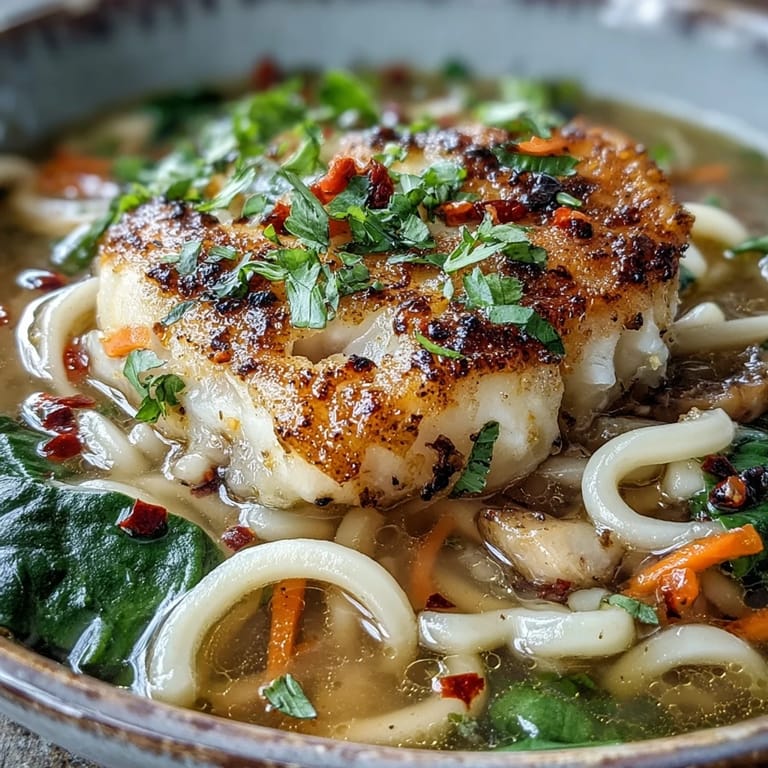
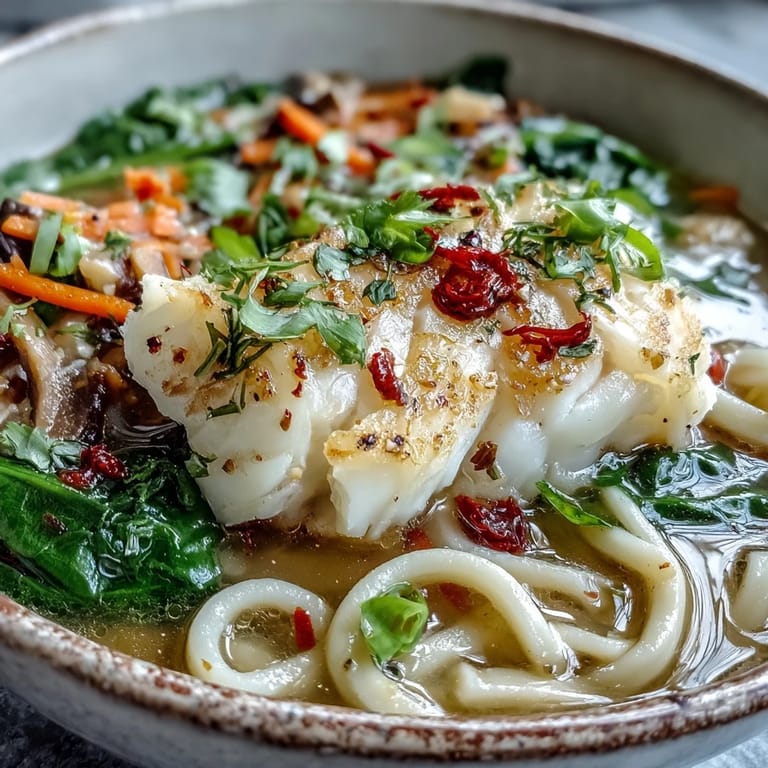
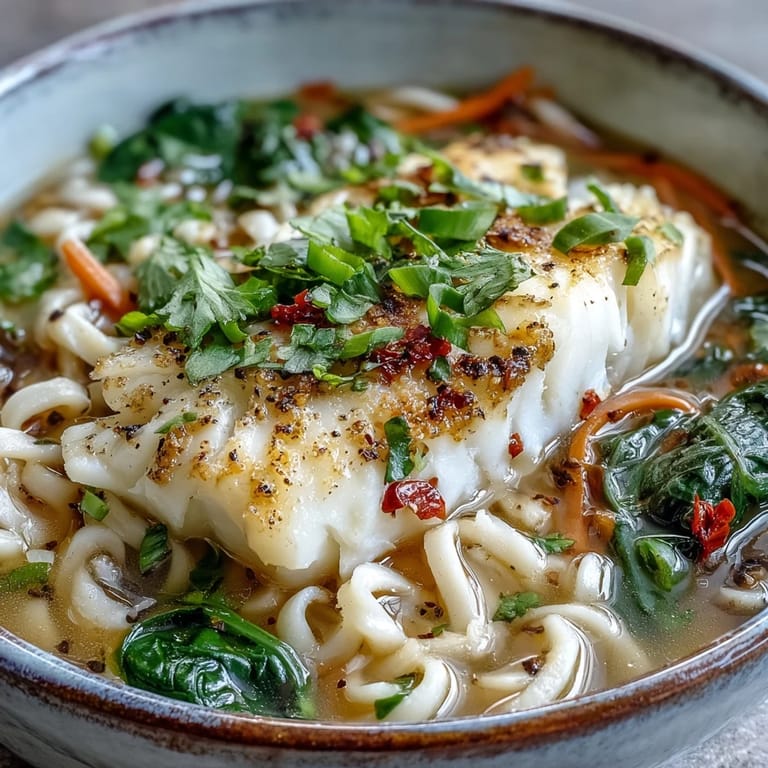
- Carefully lift the poached cod out of the broth and set it aside, then ladle the hot broth and vegetables over the noodles in each bowl. Top each portion with a piece of cod, then garnish with sliced spring onions and fresh coriander leaves before serving immediately.
 Pin it
 The first time I served this to friends, someone said it tasted like a hug in a bowl, and I have never found a better description. We sat around the table with our chopsticks and spoons, slurping noodles and fishing out pieces of cod, and the conversation slowed down because everyone was too busy eating. That is when I knew this recipe was a keeper, not just because it tasted good, but because it made people stop and savor something together.
Choosing Your Fish
Cod is mild and forgiving, but haddock or halibut work just as well if you find them fresh at the market. I have also used tilapia in a pinch, though it is a bit more delicate and needs a shorter poaching time. Whatever fish you choose, make sure the fillets are similar in thickness so they cook evenly, and avoid anything too oily like salmon because it can overwhelm the delicate coconut broth. Pat the fillets dry with a paper towel before adding them to the pot, which helps them poach cleanly without clouding the broth.
Adjusting the Heat
The red chili and curry paste bring warmth, but you can dial it up or down depending on who is eating. I once left out the chili entirely for my neighbor who does not do spicy, and the dish still tasted complete and flavorful. If you want more kick, add a drizzle of chili oil or a spoonful of sambal oelek just before serving, which lets each person control their own heat level. Taste your curry paste before you add it because brands vary wildly, and some are intensely hot while others are more aromatic than fiery.
Making It Your Own
This recipe is forgiving and adaptable, so do not stress if you are missing an ingredient or two. I have swapped udon for rice noodles when I needed it gluten free, and I have thrown in bok choy or snap peas when I had them in the crisper drawer. The broth is the star, so as long as you get that right, the rest can change based on what you have on hand.
- Try adding a handful of bean sprouts at the end for extra crunch and freshness.
- Stir in a spoonful of miso paste along with the fish sauce for deeper umami flavor.
- Garnish with toasted sesame seeds or crispy fried shallots if you want a little textural contrast on top.
 Pin it
 This dish has become my go to when I want something nourishing but not heavy, something that feels special without requiring hours in the kitchen. I hope it finds a place in your rotation too, especially on those nights when you need warmth, comfort, and a meal that brings people together.
Recipe FAQs
- → Can I substitute cod with another type of fish?
Yes, you can use any firm white fish such as haddock, halibut, or sea bass. Ensure the fillets are of similar thickness for even poaching.
- → How do I know when the cod is properly poached?
The cod is ready when it turns opaque and flakes easily with a fork. This typically takes 6-8 minutes in gently simmering broth. Avoid boiling as it can make the fish tough.
- → Can I make this dish gluten-free?
Absolutely. Replace udon noodles with rice noodles and use tamari instead of soy sauce. Always verify that your fish sauce and curry paste are gluten-free as well.
- → What can I use instead of fresh udon noodles?
Dried udon noodles work well, or you can substitute with rice noodles, soba noodles, or even ramen noodles. Adjust cooking times according to package instructions.
- → How can I adjust the spice level?
For milder heat, omit the red chili and reduce the curry paste. For more heat, add extra chili slices or finish with chili oil. You can also serve chili on the side for individual preference.
- → Can I prepare any components ahead of time?
You can prepare the broth base up to step 4 in advance and refrigerate. When ready to serve, reheat the broth, then poach the fish and cook the noodles fresh for best texture.