 Pin it
 The air in my kitchen always changes when a pot of minestrone begins to bubble on the back burner. I remember standing over a simmering pot during a particularly rainy Tuesday while trying to use up the random vegetables in my crisper drawer. It was not a planned meal but it turned into the most comforting bowl I had eaten all month. There is something grounding about the rhythm of dicing carrots and celery while the steam fogs up the windows. This soup is less of a recipe and more of a warm hug for your tired self.
Last winter I made a massive batch of this for a neighbor who was feeling under the weather. I carried the heavy pot across the street through the snow and we ended up sitting on her porch steps just talking while the soup cooled. We laughed about how a simple potato can transform a thin broth into something velvety and rich. It reminded me that the best meals are the ones meant to be shared with someone who needs a little extra light. That afternoon the kitchen felt like the heart of the whole neighborhood.
Ingredients
- Olive oil: Use a good quality oil because it carries the flavor of the aromatics throughout the entire base.
- Yellow onion: Sautéing this slowly until it is translucent provides the essential sweetness that balances the acidic tomatoes.
- Carrots and celery: These two provide the crunch and earthy foundation that every traditional Italian soup requires.
- Garlic: Freshly minced cloves offer a punchy depth that dried powder simply cannot replicate in a long simmer.
- Zucchini: This adds a beautiful pop of green and a soft texture that absorbs the herb infused broth.
- Potato: Dicing these small helps them release a bit of starch which naturally thickens the soup.
- Green beans: Fresh beans give a lovely snap to each spoonful and keep the meal feeling vibrant.
- Diced tomatoes: These provide the acidic backbone and a rich red hue that defines the soup style.
- Cannellini beans: These white beans are buttery and smooth providing a great source of plant based protein.
- Ditalini pasta: Small shapes are best because they fit perfectly onto a spoon alongside the chopped vegetables.
- Vegetable broth: Choosing a low sodium version allows you to control the seasoning precisely at the end.
- Italian herbs: This blend of oregano and basil brings that classic Mediterranean aroma to your kitchen.
- Bay leaf: Dropping one in during the simmer adds a subtle woodsy note that ties all the flavors together.
- Baby spinach: Swirling these leaves in at the very end keeps them bright green and tender.
- Parmesan cheese: A final sprinkle adds a salty umami finish that makes the flavors sing.
Tired of Takeout? 🥡
Get 10 meals you can make faster than delivery arrives. Seriously.
One email. No spam. Unsubscribe anytime.
Instructions
- Softening the base:
- Heat the oil in your heaviest pot and cook the onion carrots and celery until they are fragrant. This step builds the flavor layer that supports every other ingredient later on.
- Integrating the garden:
- Stir in the garlic zucchini potato and green beans to let them mingle with the oil for a few minutes. You want the vegetables to start softening slightly before the liquid hits the pan.
- Building the broth:
- Pour in the tomatoes beans broth and dried herbs before tossing in the bay leaf for depth. Bring everything to a rolling boil then lower the heat so the flavors can marry under a lid.
- Cooking the pasta:
- Drop the ditalini into the bubbling liquid and keep the pot uncovered so the pasta cooks perfectly. Stir occasionally to ensure the small shapes do not stick to the bottom of the pot.
- Wilting the greens:
- Remove the bay leaf and fold in the fresh spinach or kale during the final two minutes. The residual heat is enough to soften the greens without overcooking them.
- The final touch:
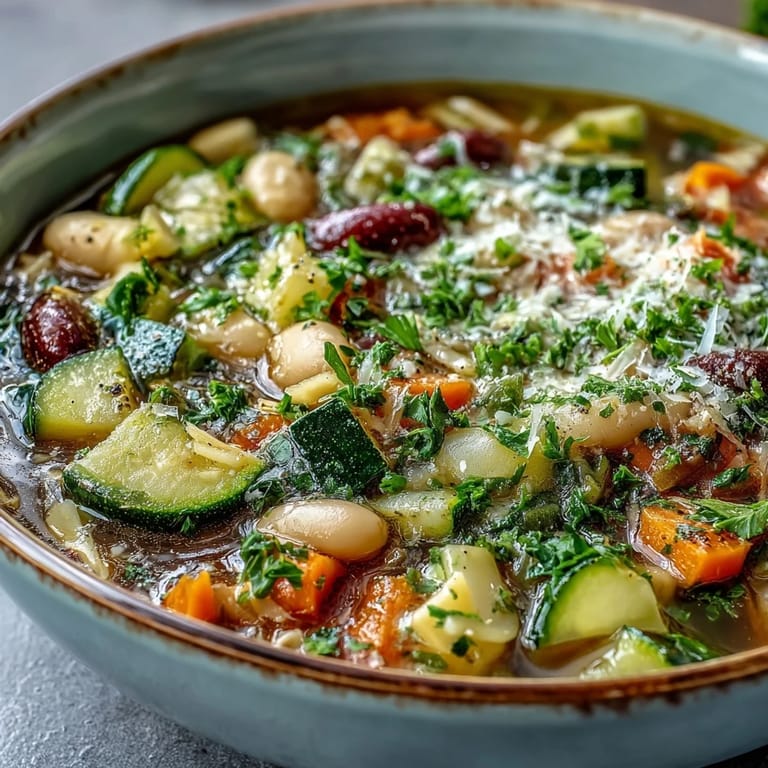
- Taste your creation and add salt or pepper until the flavors are exactly where you want them. Ladle the soup into deep bowls and finish with a generous dusting of cheese and parsley.
 Pin it
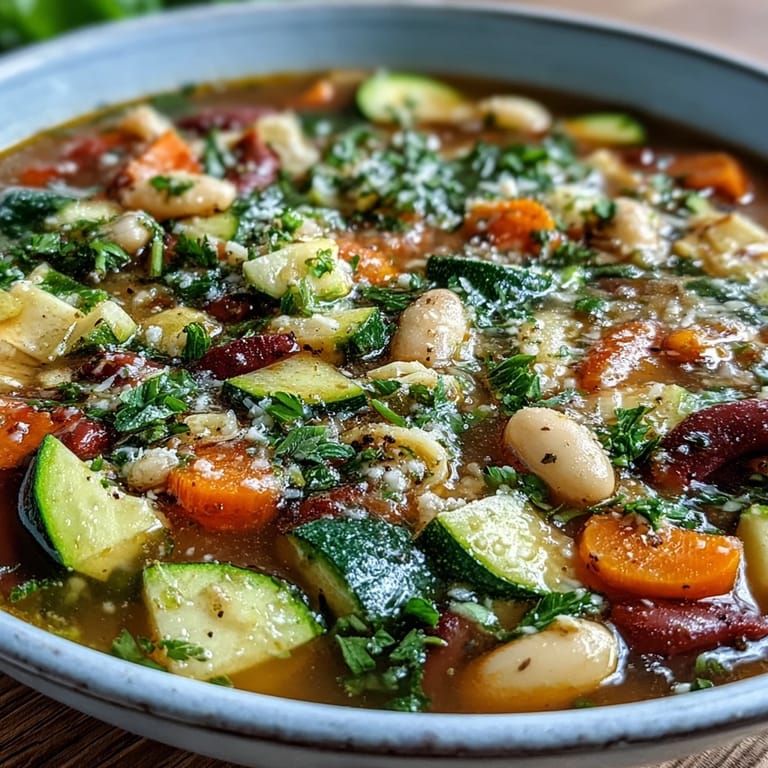
 There was a time I accidentally doubled the pasta and the soup turned into a thick stew overnight. My kids actually preferred it that way and now we sometimes let it sit on purpose. It taught me that recipes are just suggestions and the best versions happen when you stop worrying about perfection. Now every time I see ditalini in the pantry I think of that happy accident.
Seasonal Variations
I love how this pot changes with the calendar by simply swapping a few ingredients. In the autumn I often add diced butternut squash or pumpkin for a sweeter and creamier profile. Spring calls for fresh peas and asparagus spears which make the whole bowl feel light and refreshing. It is a wonderful way to use whatever is peaking at the local farmers market.
Serving Suggestions
Nothing beats a thick slice of crusty sourdough bread to swipe up the last drops of tomato broth. I usually toast the bread with a little garlic butter to add another layer of crunch to the meal. If you are feeling fancy a glass of red wine like a Chianti pairs beautifully with the herbal notes. It turns a simple weeknight dinner into a slow and intentional dining experience.
Storage and Reheating
This soup is even better the next day because the herbs have more time to infuse into the potatoes. If you plan on freezing it consider cooking the pasta separately so it does not get bloated during thawing. Just store the liquid base in airtight containers and add fresh noodles when you are ready to eat.
- Keep the soup in the fridge for up to four days in a sealed container.
- Add a splash of water or extra broth when reheating to loosen the consistency.
- Wait to add the fresh parsley until you are actually serving the reheated bowl.
 Pin it
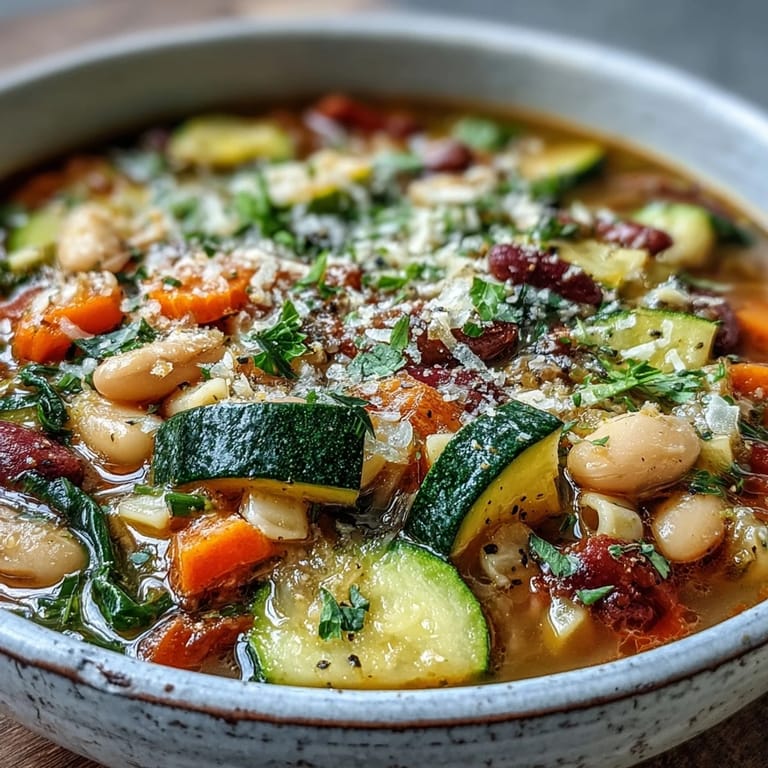
 I hope this hearty bowl brings as much warmth to your table as it has to mine over the years. Enjoy the process of chopping and simmering and most importantly enjoy the company around you.
Recipe FAQs
- → What vegetables go in minestrone?
Traditional minestrone includes onions, carrots, celery, zucchini, potatoes, and green beans. You can customize with seasonal vegetables like cabbage, peas, or squash based on what's available.
- → What pasta works best in this soup?
Small pasta shapes like ditalini, elbow macaroni, or shells hold up well in broth without becoming mushy. For gluten-free options, use rice-based small pasta or quinoa pasta.
- → Can I make this ahead of time?
Yes, minestrone actually improves overnight as flavors meld. Store pasta separately if making ahead, and add fresh spinach just before serving to maintain texture.
- → How do I store leftovers?
Refrigerate in an airtight container for up to 4 days. The pasta may absorb liquid, so add extra broth when reheating. Freeze without pasta for up to 3 months.
- → What can I serve with minestrone?
Crusty Italian bread or garlic bread pairs perfectly. A simple green salad with balsamic vinaigrette complements the hearty soup, or serve with grated Parmesan and fresh basil.
- → Is minestrone suitable for vegetarians?
This version uses vegetable broth, making it naturally vegetarian. For vegan diets, simply omit the optional Parmesan cheese or use plant-based alternatives.